
Why do I feel touched out after having a baby?
The postpartum period is physically, emotionally, and mentally demanding. Between your baby’s constant needs, changes in your body, and the mental load of motherhood, it’s easy to feel drained. It’s not just the noise or physical demands, it’s the relentless pull on your attention and energy. If you find yourself craving silence, feeling touched-out, or struggling to cope with the chaos, that is sensory overload at work.
The noise, touch, and chaos of postpartum life can feel like too much. Therapy can help you understand your triggers, regulate your nervous system, and find ways to create moments of calm, so you can feel more present and in control.

What it looks like
You might be struggling with overstimulation if you...
Sensory overload can show up in many ways. You might benefit from therapy if you:

Common questions

Isn’t feeling touched out just part of having a newborn?
Some chaos comes with a newborn. Feeling touched out and overwhelmed every single day is your nervous system asking for relief.
- Constant input is not the same as constant copingThe holding, feeding, and noise of newborn life never really pause, and your senses were not built to run without a break. Feeling maxed out by it is a normal response to a relentless season, not a sign that you should simply toughen up.
- It shapes your mood and patienceSensory overload does not stay in your body, it leaks into how you feel and how you respond to the people you love most. Naming it as overload, rather than as something wrong with you, is what makes it something you can actually work with.
- Relief is learnableOverstimulation is not a fixed fact of motherhood you have to white-knuckle through. With the right tools, you can lower the volume on the input and feel more present again, even in the middle of the chaos.



Does feeling touched out mean something is wrong with me?
Needing your body back for a moment does not mean something is wrong with you, it means your senses have been carrying a heavy load without a break. You can love your baby completely and still crave a little quiet and space.


Does feeling overstimulated mean I’m not a good mom?
Overstimulation is a natural response to the demands of postpartum life, not a verdict on the kind of mom you are.
- Your body is adjusting to a brand-new normalIn the fourth trimester your brain and body are absorbing constant touch, noise, and needs they have never had to manage before. Feeling stretched by that is a sign of how much you are carrying, not a sign that you are coming up short.
- Overwhelm and love live side by sideYou can adore your baby and still feel desperate for quiet by the end of the day. The two are not in conflict, and feeling one does not cancel out the other.
- Doing your best is enoughThere is no version of these weeks where a mom feels calm and unbothered through every cry and every wakeup. Meeting your baby while running on empty already takes more than most people will ever see.
Key terms
The language of feeling touched out
Naming what is happening takes some of its power away. These are the words for what the newborn weeks do to your senses.
- What does being touched out mean?
- The bone-deep need for your body to be your own again after hours of holding, feeding, and being climbed on. It is not a lack of love for your baby, it is a nervous system that has had no break from constant physical contact.
- What is sensory overload after having a baby?
- When the sound, touch, and demands of life with a newborn pile up faster than you can process them, until even small things feel like too much. It is your senses telling you they are maxed out, not a sign that you are doing anything wrong.
- Why does noise feel unbearable postpartum?
- The crying, the white noise, the monitor, the constant hum of a busy house can grate in a way they never did before. A depleted, sleep-starved nervous system has a much shorter fuse for sound, and that is a normal response to an overloaded season.
- What is the fourth trimester?
- The first few months after birth, when your baby is adjusting to the world and you are adjusting to a body, a schedule, and a level of input that are all brand new. Naming it as its own season makes room for how much your senses are carrying.

Does wanting time alone mean I don’t love my baby?
Needing space doesn’t mean you love your baby any less. It means you’re human and your senses need a moment to reset.
- Space is not the opposite of loveWanting a few minutes where no one is touching you does not measure how much you adore your baby. It measures how much physical contact your body has absorbed without a pause.
- Resetting helps you come back steadierA short break to quiet your senses is not a luxury or an escape, it is how a maxed-out nervous system finds its footing again. The calm you borrow from it comes home with you to your baby.
- The guilt is the heavier loadSo many moms talk themselves out of the very break that would help, convinced that needing it says something bad about them. That guilt drains more than the rest would have refilled.
Free tool
~5 minFreeThe Mom Rage Map
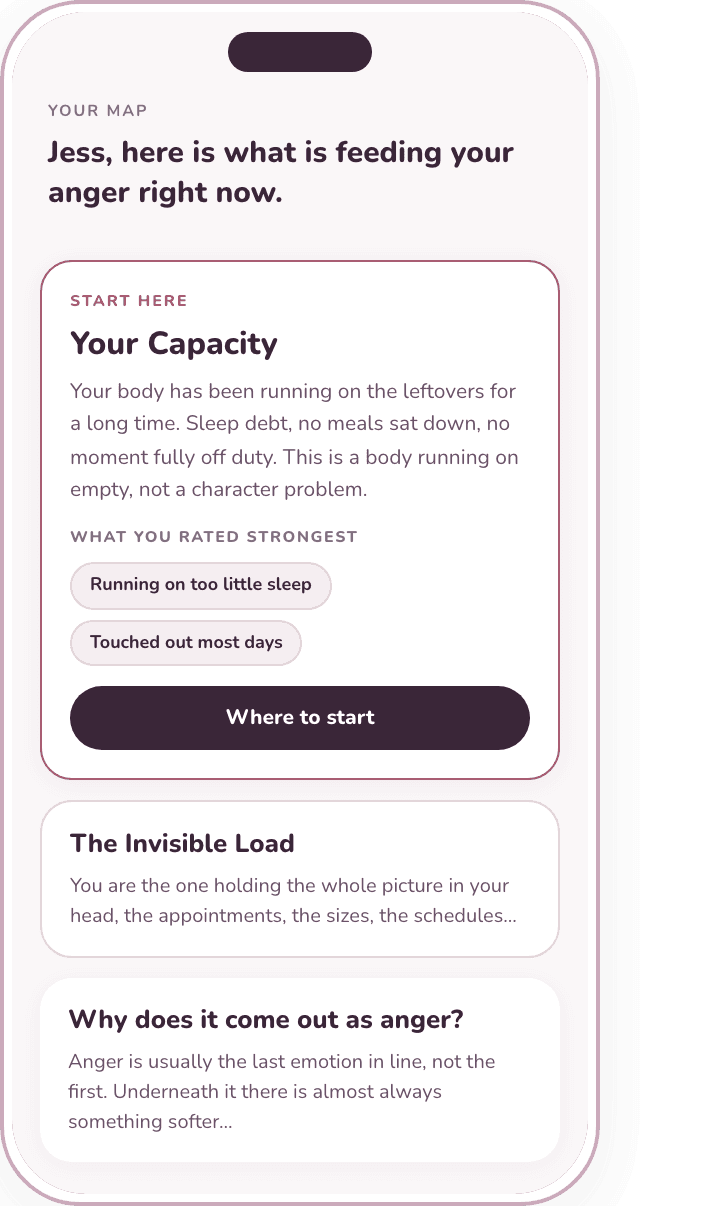
You love your kids, and you still find yourself snapping over the small stuff, then sitting in the guilt afterward. The Mom Rage Map shows you what is actually fueling that anger across nine areas of your life, not just how to hold it in.
It begins with what your body is running on after a baby, the broken sleep and the constant touch, so the touched-out feeling underneath the anger shows up clearly, with one place to start.
How therapy helps
Momwell can help you
Feeling overstimulated isn’t your fault. We’ll help you gently explore what’s contributing to sensory overload and find ways to ease the overwhelm.

Understand your triggers
Feeling overstimulated isn’t your fault. We’ll help you gently explore what’s contributing to sensory overload and find ways to ease the overwhelm.
Regulate your nervous system
Your nervous system is working hard. Therapy offers simple, effective techniques to help you reset, feel grounded, and move through sensory overload with more ease.
Create boundaries that feel good
It’s okay to need space. We’ll help you find ways to protect your energy, communicate your needs, and create small moments of calm without guilt.
Let go of the guilt
Wanting time to yourself doesn’t mean you’re failing, it means you’re human. Therapy can help you replace self-judgment with self-compassion.
Recharge in ways that work for you
Even in the busiest seasons of motherhood, there are ways to care for yourself. We’ll help you build simple, realistic strategies that fit into your life.
Feel more in control of your reactions
You deserve to feel steady, present, and less reactive. Therapy gives you the tools to manage overstimulation so you can respond with more patience and ease.

Shouldn’t I just push through and deal with it?
Pushing through alone is not the only option. Ignoring overload tends to deepen it, while support helps you carry it.
- Powering through has a costOverstimulation that is never tended to does not quietly fade, it builds toward burnout and a shorter and shorter fuse. White-knuckling it usually leaves you with less to give, not more.
- You were never meant to carry it soloThe fourth trimester was not designed to be weathered alone, and needing help with it is not a weakness. Leaning on support is how moms have always made it through demanding seasons.
- Caring for yourself is part of the workTending to your own depletion is not stealing from your baby, it is what keeps you able to meet them. With real tools, managing the overload and caring for yourself can happen at the same time.
Free tools and resources
Learn more about managing overstimulation, free and at your own pace.



What clients say
Mom-centered, judgment-free care on your terms.
“I was struggling so much and feeling extremely overwhelmed as a new mother when I discovered Momwell. I thought I was the only one struggling and that there was something wrong with me for not being able to handle it all. After listening to the podcast, I’m feeling so much more like myself again! Motherhood is still hard, but I feel like I can finally breathe and enjoy it. Thank you, Erica!”
“I’d just gotten done crying after yelling at my children for the 100th time that day, feeling like I was a terrible mother, when I found the Mom Rage course. It was so comforting to hear people talking about exactly what I was going through–with NO judgment. I left with the tools I needed to recognize when I’m getting overwhelmed and bring myself back down. Our lives have gotten so much easier–I’m so grateful to Momwell!”