
How do I parent a neurodivergent child?
Parenting a neurodivergent child can feel overwhelming, but you don’t have to navigate it alone.
You deserve support too. This work is about caring for the parent, so you can show up for your child without running on empty.

What it looks like
You may be struggling with parenting a neurodivergent child if you...
Parenting a neurodivergent child can ask a lot of you. You might benefit from therapy if you:

Common questions


If I just try harder, can I fix this?
Your child isn’t a problem to be fixed, and exhausting yourself trying isn’t the answer.
- There is nothing here to fixNeurodivergence is a different way of experiencing the world, not a flaw waiting to be corrected. Support is about understanding your child’s needs and your own, not pushing harder until something gives.
- Willpower was never the missing pieceTrying harder tends to drain you without changing much, because effort alone cannot bridge a gap that is really about understanding. What helps is learning how your child is wired, so your energy goes where it actually lands.
- Strategies beat sheer forceA therapist can help you make sense of your child’s behavior and offer strategies tailored to their strengths and challenges. That lets you parent with more confidence and far less of the willpower-only exhaustion.


Is it normal for this to feel harder than other parents make it look?
Parenting a neurodivergent child asks more of you in ways most people never see, and the fact that others look like they have it handled says nothing about how much you are actually carrying.


Isn’t therapy only for my child?
Your child may have their own support, but you need support too. This space is for the parent.
- The mental load is realParenting a neurodivergent child carries a real emotional and mental load that often goes unseen. That weight deserves a space of its own, where the focus is on you rather than on the next appointment or plan.
- A steadier you steadies the roomTherapy helps you build tools to regulate your nervous system and respond to your child’s needs with more calm and confidence. The calmer you can stay, the more grounded the hard moments become for both of you.
- You don’t have to coordinate it aloneSo much of this season is advocacy, resources, and collaborating with teachers or healthcare providers. Therapy gives you a place to think it through with support, instead of holding the whole map in your own head.
Key terms
The language of neurodivergent parenting
Shared words make this season easier to talk about. These are strengths-based terms that help you understand your child, and yourself, with more compassion.
- What does neurodivergent mean?
- Neurodivergent describes a brain that processes the world differently from what is considered typical, including autism, ADHD, and other ways of thinking and sensing. It names a difference to understand and support, not a deficit to fix.
- What is masking?
- Masking is when a neurodivergent child hides or holds in their natural responses to fit in, which can look like coping but quietly costs a lot of energy. Recognizing it helps you create spaces where your child can simply be themselves.
- What are sensory needs?
- Sensory needs are the specific levels of sound, light, touch, and movement that help your child feel regulated and safe. Meeting them is not indulgence, it is how many neurodivergent kids settle enough to learn, play, and connect.
- What are accommodations?
- Accommodations are the supports and adjustments, at home or school, that let your child show what they are capable of. They work with your child’s wiring rather than against it, so their strengths have room to show up.

Is taking care of myself selfish when my child needs so much?
Caring for yourself isn’t taking something away from your child. It’s what makes it possible to keep showing up.
- Rest is not a withdrawalTending to your own needs does not subtract from your child, even when it feels that way at first. It refills the reserves you draw on every single day, so there is something left to give.
- Empty cups can’t pourRunning on nothing makes patience, presence, and steadiness almost impossible to find. Carving out space for yourself is what keeps you able to show up for your child without burning out.
- You deserve support tooYour needs matter in their own right, not only because they help you parent. Therapy helps you make room for them without guilt, treating your well-being as part of the picture rather than an afterthought.
Free tool
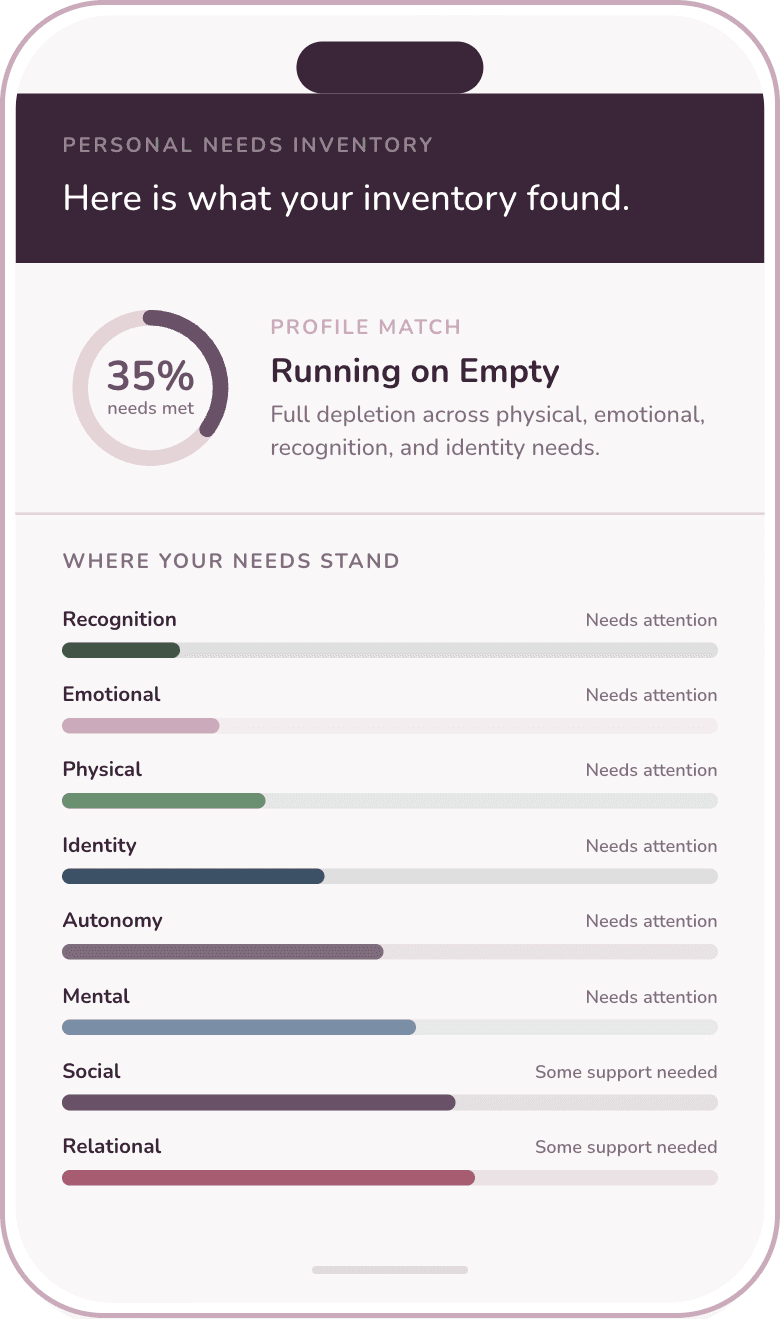
~5 minFreePersonal Needs Inventory
You already know something is off. The Personal Needs Inventory helps you get specific about what it is, across eight areas of your life, so you can finally see where to start.
So much of this season goes to your child’s needs that your own can disappear from view. This is the quickest way to see where you are depleted, without judgment.
You leave with a snapshot of what is running low and a few concrete places to start, so you have a little more to draw on the next time the day asks a lot of you.
How therapy helps
Momwell can help you
We’ll help you make sense of your child’s behavior, providing strategies tailored to their strengths and challenges, so you can feel more confident in your parenting approach.

Understand your child’s needs
We’ll help you make sense of your child’s behavior, providing strategies tailored to their strengths and challenges, so you can feel more confident in your parenting approach.
Develop tools to support emotional regulation
Learn techniques to help your child navigate big emotions while staying calm and grounded yourself.
Manage your own emotions
Our therapists help you build tools to regulate your nervous system and respond to your child’s needs with more calm and confidence.
Navigate advocacy and resources
Get guidance on advocating for your child, accessing resources, and collaborating with teachers or healthcare providers.
Strengthen your connection
Therapy helps you build a deeper, more connected relationship with your child by fostering empathy, understanding, and mutual trust.
Protect your well-being
You deserve support too. We help you carve out space for your own needs, so you can show up for your child without burning out.
If I feel overwhelmed, am I doing something wrong?
Feeling overwhelmed isn’t a sign of failure. It’s a sign that you’re carrying a lot without enough support.
- The overwhelm reflects how much you are holdingThe weight you feel reflects how much you are holding, not how well you are doing it. This is hard work that no one is expected to do alone, and feeling it does not mean you are doing it wrong.
- Needing support is not the same as failingThe belief that you should handle this on your own only adds guilt on top of the exhaustion. Reaching for help is part of doing this well, and it lightens a load that was never meant for one person.
- There is somewhere to put it downTherapy gives you a place to process the guilt, frustration, and burnout out loud. From that steadier ground, you can build a deeper, more connected relationship with your child through empathy, understanding, and mutual trust.


Does needing support mean I’m not cut out for this?
Needing support doesn’t mean you’re failing your child. It means you’re human.
- This is one of the hardest jobs there isParenting a neurodivergent child asks a great deal of you, often with little rest. Needing support in the middle of that is a completely human response, not a measure of whether you are cut out for it.
- Help is part of parenting wellReaching for support is something steady parents do, not a sign that you are falling short. It is how you keep going with more patience and presence than white-knuckling alone would ever allow.
- You are already showing upLooking for help is itself an act of care for your child and yourself. It says you are paying attention and willing to do the work, which is exactly what your child needs from you.
Free tools and resources
Learn more and care for yourself, free and at your own pace.



What clients say
Mom-centered, judgment-free care on your terms.
“I was struggling so much and feeling extremely overwhelmed as a new mother when I discovered Momwell. I thought I was the only one struggling and that there was something wrong with me for not being able to handle it all. After listening to the podcast, I’m feeling so much more like myself again! Motherhood is still hard, but I feel like I can finally breathe and enjoy it. Thank you, Erica!”
“I’d just gotten done crying after yelling at my children for the 100th time that day, feeling like I was a terrible mother, when I found the Mom Rage course. It was so comforting to hear people talking about exactly what I was going through–with NO judgment. I left with the tools I needed to recognize when I’m getting overwhelmed and bring myself back down. Our lives have gotten so much easier–I’m so grateful to Momwell!”