
What is postpartum rage?
Postpartum rage is an intense, often overwhelming anger that can arise after having a baby. It is a common but lesser-known symptom of postpartum depression and anxiety.
Many moms experience unexpected outbursts, irritability, or even a sense of losing control. It can be a response to exhaustion, hormonal shifts, and unmet needs, and it can travel with postpartum depression or anxiety.

What it looks like
You might be struggling with postpartum rage if…
In the exhaustion of the newborn months it can be hard to name what you are feeling. Any of these can be part of it.

Common questions

Why do I have postpartum rage?
Postpartum rage is what happens when a recovering body, broken sleep, and unmet needs pile up in the newborn months. It is a symptom with real causes underneath it, and every one of them responds to support.
- The hormonal drop of the fourth trimesterThe sharp hormonal drop in the weeks after birth can intensify anger and irritability, all while your body is still recovering from labor and delivery.
- Newborn nights and almost no sleepRound-the-clock feeding and night-waking leave you chronically short on sleep, and exhaustion lowers the threshold where frustration tips into rage.
- Too much need, too little supportWhen your own needs keep getting deferred and support is thin, the overwhelm comes out as anger. Postpartum rage can also be a lesser-known thread of postpartum depression or anxiety, and either way it responds to support.



Does postpartum rage mean I’m a bad mom?
Postpartum rage is not a measure of the mother you are, or of how maternal you feel. It’s about what your body and mind are moving through in the newborn months, and support can help you find your footing again.


Does my rage affect my baby?
One hard moment doesn’t undo the care you pour in. In the newborn months what your baby takes in most is the calm that comes after, the repair.
- No single moment defines youYou are not defined by any one moment or interaction with your baby. What they take in is the reconnection, being held, fed, and settled after a hard moment.
- Snapping is a signal of depletionSnapping, anger, or frustration on broken sleep does not define the mother you are, and it is not something to simply accept either. It is a signal of how depleted you are, and it deserves support.
- Support helps you catch it earlierWith help, the warning signs get easier to notice before the anger takes over, and the moments that used to undo you become easier to move through.
Key terms
The language of postpartum rage
Postpartum moods get lumped together, but the words mean different things. Naming what you are feeling is the first step to getting the right support.
- What is postpartum rage?
- Intense, often overwhelming anger that can surface after having a baby, sudden outbursts, irritability, or a sense of losing control. A common but lesser-known thread of postpartum depression and anxiety, it is a response to exhaustion, hormonal shifts, and unmet needs.
- What are the baby blues?
- The teariness, mood swings, and overwhelm many moms feel in the first two weeks after birth as hormones shift. Unlike postpartum depression, the baby blues usually lift on their own within a couple of weeks.
- What is postpartum depression?
- A mood condition that can develop in the first year after birth and goes beyond the baby blues: persistent sadness, hopelessness, irritability, or anger that gets in the way of daily life. It is common, it is treatable, and support helps.
- What is postpartum anxiety?
- Excessive worry, racing thoughts, and a sense of dread or being constantly on edge after having a baby. Like postpartum depression, it is common and responds well to support.

Will postpartum rage go away on its own?
Some of it may ease as your hormones settle and sleep returns, but the pressures underneath rarely resolve on their own, and many moms wish they had reached out for support sooner.
- Hormones settle, the pressure doesn’tHormones do settle in the months after birth, but the exhaustion, unmet needs, and pressure underneath the rage rarely resolve on their own.
- Untreated, it can lingerResearch shows untreated postpartum mood difficulties can persist for years. Naming what is happening early changes how long you carry it.
- Support helps you feel better soonerYou don’t have to reach a breaking point to deserve help. Many moms regret waiting, and reaching out sooner means feeling like yourself again sooner.
How therapy helps
Momwell can help you
Our therapists provide a safe, judgment-free space to explore what’s fueling your anger and how to address it.

Understand your postpartum rage
Our therapists provide a safe, judgment-free space to explore what’s fueling your anger and how to address it.
Regain emotional control
You’ll learn how to recognize the warning signs of rage, regulate emotions, and respond in a way that aligns with how you want to parent.
Repair and strengthen relationships
Therapy helps you rebuild trust and connection with your baby, partner, and other loved ones after moments of anger.
Reduce stress and mental overload
We’ll work with you to create a support plan, manage the invisible labor of motherhood, and prevent burnout.
Replace guilt with self-compassion
Therapy can help you shift from self-blame to self-understanding, so you feel supported, not ashamed.
Prioritize your well-being without guilt
Taking care of yourself is taking care of your family. We’ll help you create space for your needs without feeling selfish.
Free tools and resources
Learn more about postpartum rage, free and at your own pace.
Free tool
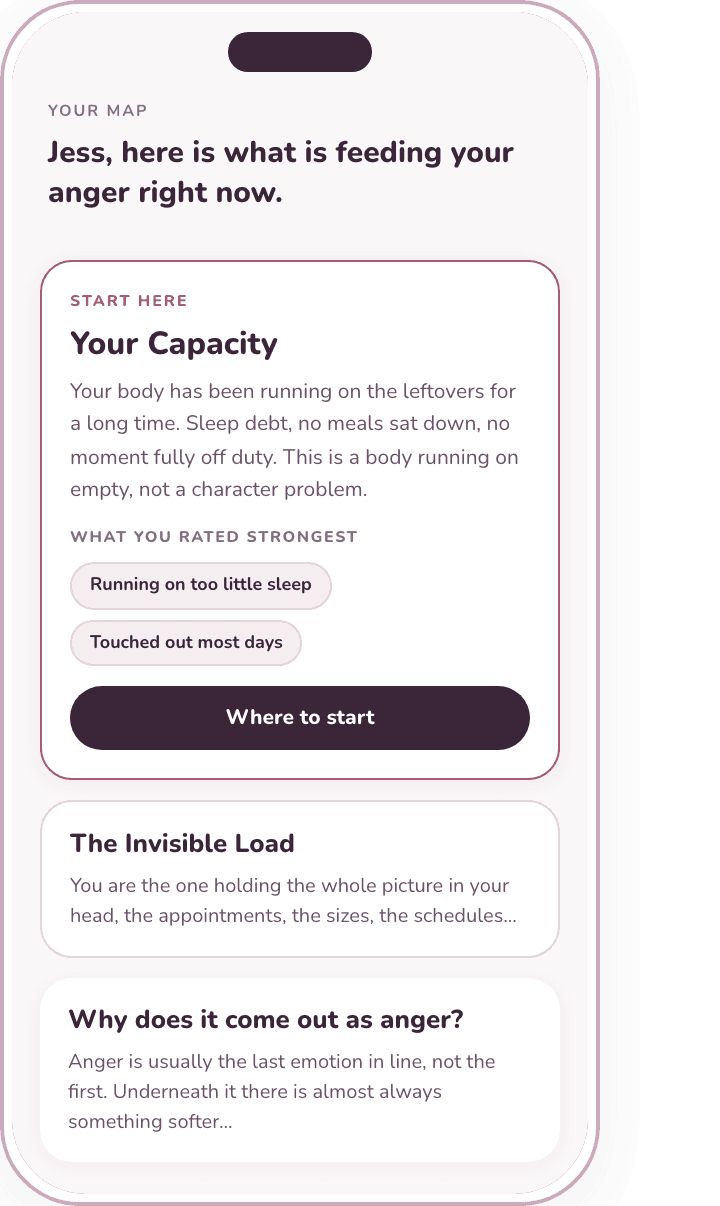
~5 minFreeThe Mom Rage Map
You love your kids, and you still find yourself snapping over the small stuff, then sitting in the guilt afterward. The Mom Rage Map shows you what is actually fueling that anger across nine areas of your life, not just how to hold it in.
It asks directly about your body, your sleep, your hormones, and your recovery, so anger that started after birth shows up clearly, and points you to one place to start.



What clients say
Mom-centered, judgment-free care on your terms.
“I was struggling so much and feeling extremely overwhelmed as a new mother when I discovered Momwell. I thought I was the only one struggling and that there was something wrong with me for not being able to handle it all. After listening to the podcast, I’m feeling so much more like myself again! Motherhood is still hard, but I feel like I can finally breathe and enjoy it. Thank you, Erica!”
“I’d just gotten done crying after yelling at my children for the 100th time that day, feeling like I was a terrible mother, when I found the Mom Rage course. It was so comforting to hear people talking about exactly what I was going through–with NO judgment. I left with the tools I needed to recognize when I’m getting overwhelmed and bring myself back down. Our lives have gotten so much easier–I’m so grateful to Momwell!”