
What is sleep deprivation doing to your mental health?
Sleep deprivation is more than just feeling tired, it disrupts your emotional well-being, clouds your judgment, and makes motherhood harder to enjoy.
It rarely comes from one bad night. It builds over months of feeds, wakings, and lying there half-awake listening for the baby, until running on empty becomes the baseline you are trying to mother from.

What it looks like
You might be struggling with sleep deprivation if…
Broken sleep wears on far more than your energy. Any of these can be part of it.

Common questions

Isn’t exhaustion just part of being a mom?
Some sleepless nights are normal. Chronic exhaustion that wears down your mind and relationships is not something you simply have to accept.
- There is a line between tired and depletedA few rough nights are part of early motherhood and pass on their own. Chronic sleep deprivation is different, it builds over months and starts to harm your mental health and relationships.
- The toll shows up in your emotionsSleep loss is linked to irritability, anxiety, and real difficulty regulating emotions in the moment. The shorter fuse and the tears that come from nowhere are symptoms of depletion, not evidence that something is wrong with you.
- Even a little protected sleep helpsYou do not need a perfect night to feel the difference. Even a 4 to 6 hour block of consolidated sleep can meaningfully improve brain function and emotional resilience.



If I ask for help at night, am I failing as a mom?
Sharing nighttime labor doesn’t make you less of a mom. It is how you stay strong and capable enough to keep showing up.
- Nighttime care is a family affairBeing the one who breastfeeds does not mean you have to be the one responsible for every night waking and resettling. Sharing the nights is how you stay well enough to keep showing up without burning all the way down.
- Your needs and your baby’s are not oppositesPutting your baby first does not have to mean putting yourself last at every hour. Your well-being is essential to your family’s health, and a rested mom has more to give, not less.
- Protecting sleep is showing upWhen you prioritize sleep, you show up as the mom you want to be, more patient, more present, more yourself. Therapy can help you build a plan that shares the load instead of carrying it alone.
Key terms
The language of sleep deprivation
Naming what is happening takes some of its power away. These are the terms that make broken sleep easier to see and to talk about.
- What is sleep deprivation?
- Going without the rest your body and mind need to function, night after night, until tiredness becomes the baseline. In motherhood it is rarely about one bad night and far more often about months of broken, interrupted sleep.
- What is fragmented sleep?
- Sleep that is broken into short pieces by feeds, wakings, and listening for the baby, so it never adds up to true rest. Babies have shorter sleep cycles than adults, which is why napping when the baby naps so often does not refill the tank.
- What is sleep debt?
- The running deficit that builds when you lose a little rest every night and never get the chance to pay it back. Research points to roughly 700 hours of sleep lost in a baby’s first year, which is why the exhaustion can feel bottomless.
- What is the nighttime mental load?
- The invisible work of staying half-awake, tracking the next feed, and being the one who hears every cry. It keeps your nervous system on alert even when your body is finally still, so rest never feels fully restful.


Can’t I just sleep when the baby sleeps?
Babies have shorter sleep cycles, and fragmented rest isn’t enough to sustain your health. What your body needs is a consolidated stretch of sleep, the kind that actually restores you, and sleeping when the baby sleeps rarely gets you there.
How therapy helps
Momwell can help you
Our therapists help you unpack how chronic sleep loss affects your emotions, health, and relationships.

Understand sleep deprivation’s impact
Our therapists help you unpack how chronic sleep loss affects your emotions, health, and relationships.
Build restorative habits
Learn strategies to prioritize and protect your sleep, even with an unpredictable baby schedule.
Cope with emotional overload
We’ll help you navigate guilt, anxiety, or frustration and develop tools to manage emotional burnout.
Create a support plan
Therapy empowers you to involve your partner or loved ones in sharing nighttime care, so you’re not carrying the weight alone.
Reclaim energy and mental clarity
Therapy can guide you toward creating sustainable habits that leave you feeling refreshed, present, and capable.
Prevent long-term mental health effects
Addressing sleep deprivation now reduces the risk of postpartum depression and anxiety, helping you enjoy motherhood.

Can therapy really help with something as practical as sleep?
Therapy addresses both the emotional toll and the practical challenges of sleep deprivation, and that combination is what makes real change possible.
- It works on both sides of the problemSleep deprivation is practical and emotional at once, and therapy holds both. You get support for the anxiety and overwhelm and help building a realistic plan to protect more rest.
- It sorts what is yours to carryBaby sleep patterns are largely developmental, not a verdict on your parenting. Naming that frees you from blame for the wakings you cannot control and refocuses your energy where it can actually go.
- It decouples your sleep from your baby’sTherapy helps you build a plan for maternal sleep that does not rely solely on how your baby sleeps. Untangling your rest from their wakings is often where real, lasting change in exhaustion begins.
Guide
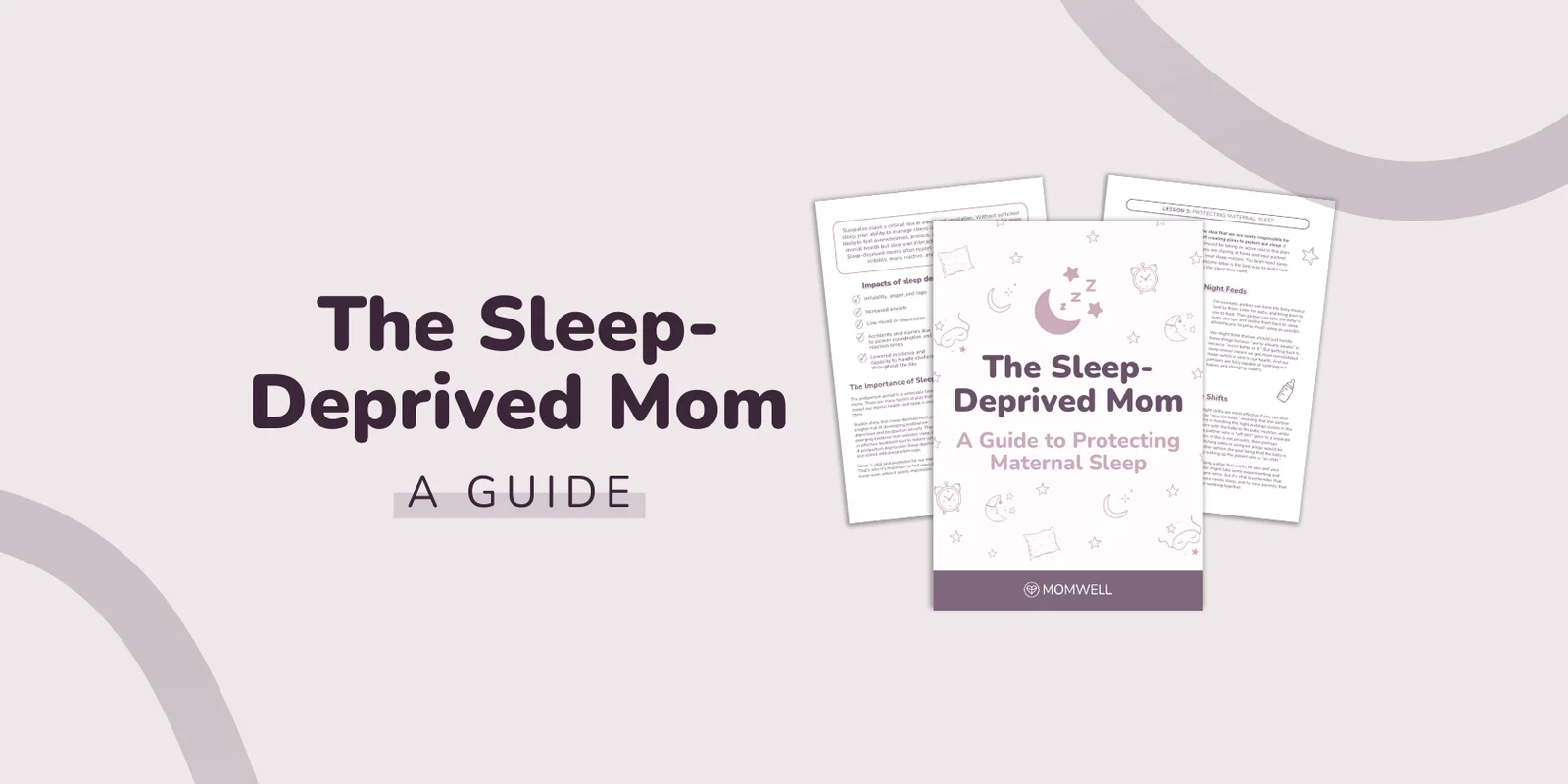
$7.99 USD18 pagesThe Sleep-Deprived Mom Guide
We can’t make your baby sleep through the night, but we can teach you practical tips to protect your sleep.
This therapist-created guide busts myths about maternal sleep and teaches you how to prioritize your sleep and make realistic changes to protect it. Proceeds help bring therapy support to more moms and increase accessibility.
Free tools and resources
Learn more about protecting your sleep, at your own pace.



What clients say
Mom-centered, judgment-free care on your terms.
“I was struggling so much and feeling extremely overwhelmed as a new mother when I discovered Momwell. I thought I was the only one struggling and that there was something wrong with me for not being able to handle it all. After listening to the podcast, I’m feeling so much more like myself again! Motherhood is still hard, but I feel like I can finally breathe and enjoy it. Thank you, Erica!”
“I’d just gotten done crying after yelling at my children for the 100th time that day, feeling like I was a terrible mother, when I found the Mom Rage course. It was so comforting to hear people talking about exactly what I was going through–with NO judgment. I left with the tools I needed to recognize when I’m getting overwhelmed and bring myself back down. Our lives have gotten so much easier–I’m so grateful to Momwell!”