
What happens to intimacy after kids?
Intimacy after kids is the emotional and physical closeness between you and your partner, and for most couples it shifts after a baby arrives. A drop in desire or connection is extremely common, and it is rarely a sign that something is wrong with you or your relationship.
Far more often, it reflects sheer exhaustion, an unfair share of the load, resentment that has gone unspoken, and not enough time or energy left for the relationship itself. Many moms also feel like strangers in their own body, or feel they “should” want sex while they are still in survival mode.

What it looks like
The distance is common, and it is rarely about love.
After a baby, many couples describe feeling more like roommates than partners. It does not mean the relationship is broken. It usually means the relationship has been running on empty.

Common questions

Is it normal to not want sex after having a baby?
A drop in desire after a baby is extremely common, and it does not mean something is wrong with you.
- Your body and your life have changedPregnancy, birth, and the early months ask an enormous amount of you, and desire is one of the first things to quiet when you are this depleted. That is a normal response to the conditions, not a flaw in you or in the relationship.
- Desire is sensitive to how you feelIt rises and falls with exhaustion, stress, and how seen and supported you feel day to day. When you are running on empty and carrying more than your share, wanting closeness is hard to summon on demand.
- Let go of the timelineThe idea that you “should” want sex by a certain point only adds pressure, and pressure tends to push desire further away. This is usually a season rather than a permanent state, and self-compassion does more than any deadline.


Why has the connection faded since we had kids?
Because the early years of parenting put real strain on a relationship, and most couples feel further apart in these years, not closer.
- Most couples feel the strainResearch cited in Releasing the Mother Load found that the majority of couples report a decline in relationship satisfaction in the first years of a baby’s life. If the closeness has faded, you are in very common company, not in a failing relationship.
- The reasons layer togetherResentment about an unfair share of the invisible load, physical and emotional intimacy struggles, mental health concerns, and simply not enough time or energy all stack on top of each other. No single one is the whole story, which is why it can be hard to name what changed.
- Distance feeds on itselfEmotional withdrawal creates distance, and that distance makes reaching for closeness feel even harder. The good news is that the same loop runs in reverse once the conditions for connection are rebuilt.

Key terms
The language of intimacy after kids
Naming what is happening makes it easier to talk about, with your partner and with a therapist. These are the words that help.
- What is intimacy?
- The emotional and physical closeness between partners, the sense of being known, wanted, and on the same team. It is far broader than sex, and after a baby the emotional side often needs tending before the physical side returns.
- What is desire after a baby?
- The wish for physical closeness, which is sensitive to exhaustion, stress, and how seen and supported you feel. A drop in desire after a baby is extremely common and rarely a sign that something is wrong with you.
- What does “touched out” mean?
- The depleted feeling of having been held, fed on, and climbed on all day, with nothing left for more touch. By evening, physical closeness can feel like one more demand rather than something for you.
- What is emotional connection?
- The friendship and felt closeness underneath a relationship, built in small daily moments rather than grand gestures. For many couples, rebuilding it is what makes physical intimacy feel possible again.

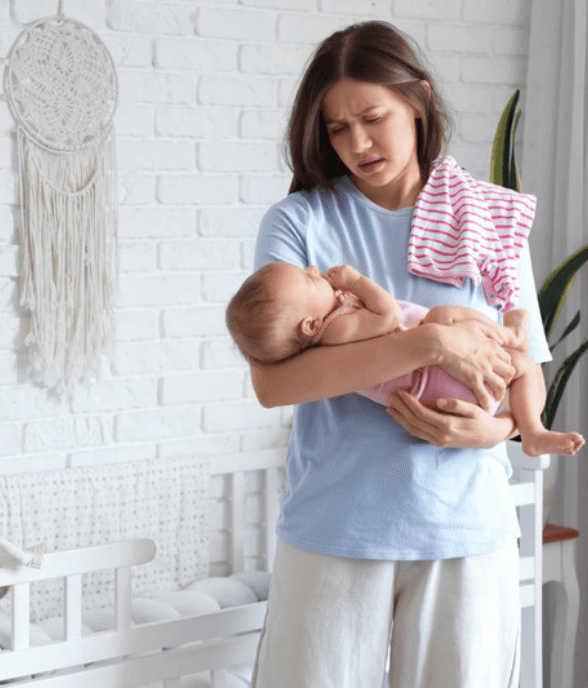
What does the mental load have to do with intimacy?
More than most couples realize. Resentment about an unfair load does not stay in the kitchen, it follows you into the bedroom.
- Unfairness becomes resentmentWhen one partner carries most of the invisible load and feels it as unfair, that resentment quietly builds. It is hard to feel desire for someone you feel unseen by or taken for granted by.
- A busy mind cannot relaxIt is hard to soften into closeness while your head is still running the household and tracking everything that has to happen tomorrow. The mental load keeps you on duty, and being on duty is the opposite of being present.
- Sharing the load is intimacy workRedistributing the invisible load is not separate from your sex life, it is part of the same project. For many couples, a fairer division of the work is the groundwork that makes closeness feel possible again.
How therapy helps
How therapy helps you reconnect
When the distance has been building for a while, it is hard to bridge it from inside the exhaustion. Therapy gives you, or you and your partner, a place to understand what changed and to rebuild closeness on purpose.
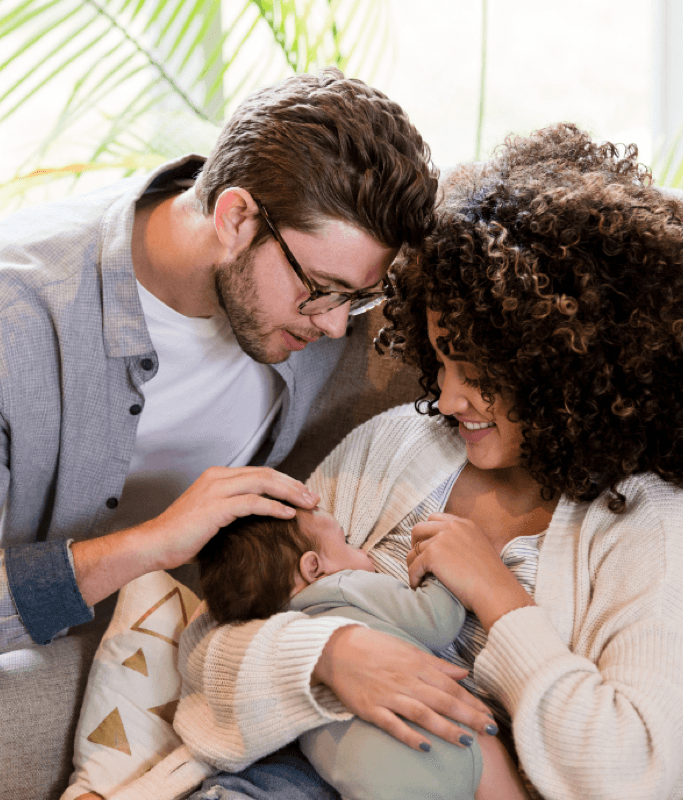
Rebuild connection
Emotional withdrawal can create distance. Therapy helps you reconnect, strengthen intimacy, and rediscover the partnership you had before parenthood.
Unpack the resentment first
It is hard to feel close while resentment about the load sits unspoken between you. Therapy helps you name it and share it, so it stops quietly draining the connection.
Take the pressure off
When intimacy feels like an expectation, desire tends to shut down further. Therapy helps you let go of the “shoulds” and rebuild closeness without pressure or timelines.
Reconnect with yourself
Feeling like a stranger in your own body is common after a baby. Therapy supports you in finding your way back to yourself, which is often where reconnection truly starts.

How do we start reconnecting?
Reconnection usually starts with the small things rather than a grand gesture, a few protected minutes to check in and feel seen before logistics take over. Rebuilding the friendship and the sense of being on the same team often does more for intimacy than focusing on sex itself.

My body feels different now. Where do I begin?
Begin with your own body, on your own terms and at your own pace. It does not have to start with sex.
- The disconnection is commonMany moms describe feeling like a stranger in their own body after pregnancy and birth. That distance is a real and common part of the picture, not something you have to apologize for.
- Going gradually is allowedFinding your way back tends to happen slowly, and reconnecting with your own body comes before reconnecting physically with a partner. There is no timeline you owe anyone, including yourself.
- You can start on your ownRelationship work can be done as individuals or as a couple, so you do not have to wait for your partner to be ready before you get support. Intimacy struggles are rarely only about sex, and any of those threads is a worthwhile place to begin.
Free tools and resources
Reconnection often starts with your own unmet needs.
Free tool
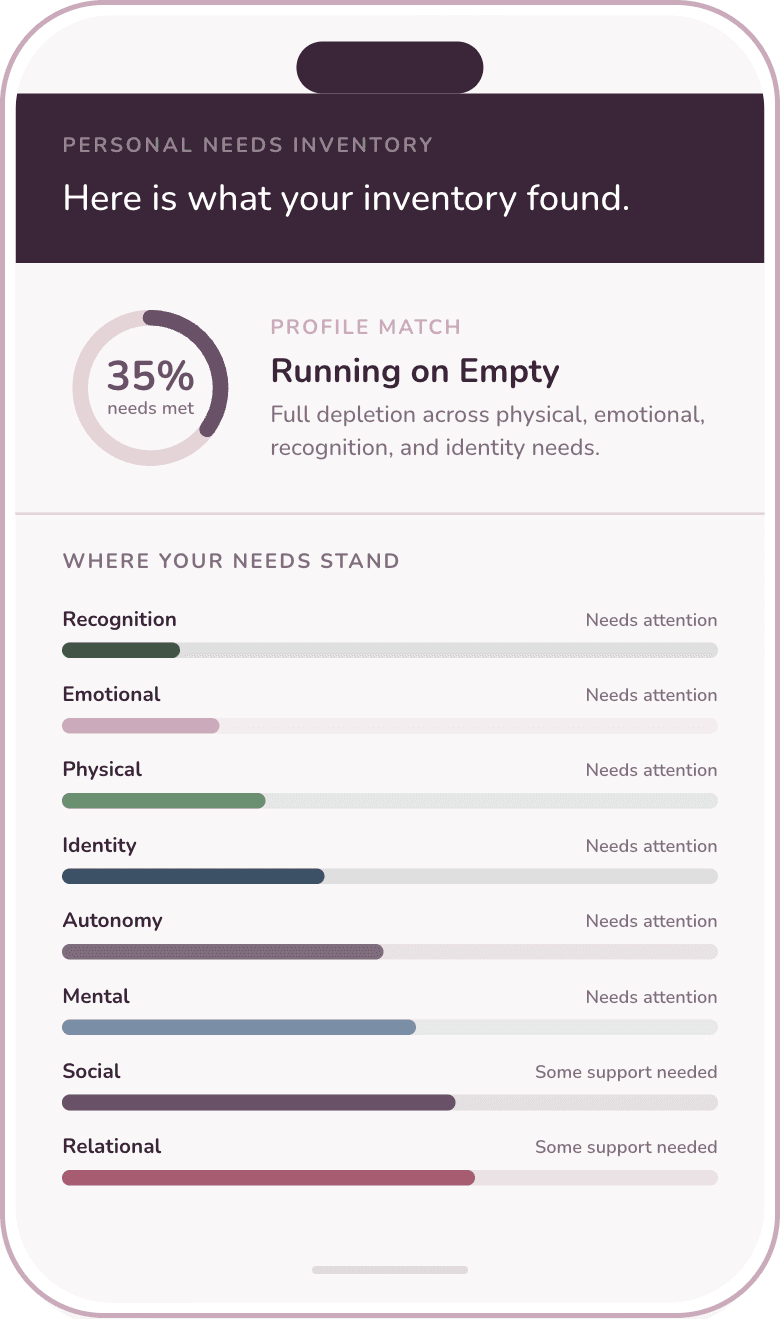
~5 minFreePersonal Needs Inventory
You already know something is off. The Personal Needs Inventory helps you get specific about what it is, across eight areas of your life, so you can finally see where to start.



What clients say
Mom-centered, judgment-free care on your terms.
“I was struggling so much and feeling extremely overwhelmed as a new mother when I discovered Momwell. I thought I was the only one struggling and that there was something wrong with me for not being able to handle it all. After listening to the podcast, I’m feeling so much more like myself again! Motherhood is still hard, but I feel like I can finally breathe and enjoy it. Thank you, Erica!”
“I’d just gotten done crying after yelling at my children for the 100th time that day, feeling like I was a terrible mother, when I found the Mom Rage course. It was so comforting to hear people talking about exactly what I was going through–with NO judgment. I left with the tools I needed to recognize when I’m getting overwhelmed and bring myself back down. Our lives have gotten so much easier–I’m so grateful to Momwell!”