
What is matrescence?
Matrescence is the process of becoming a mother. It is the profound shift in identity, body, hormones, relationships, and priorities that happens when you have a child. Like adolescence, it is a developmental transition, not a problem to fix.
It is rarely talked about, which is part of what makes it so disorienting. The shift does not happen in a single day. It happens slowly, in the daily choices that quietly start going to everyone else first, until you cannot remember the last time you chose something for yourself.

What it looks like
The slow disappearance no one warned you about
You may be in the throes of matrescence if these feel familiar.

Common questions

Why do I feel like I lost myself in motherhood?
Losing your identity in motherhood is what happens when one of the biggest changes of your life is asked of you quietly, with too little support. It is real, and it is not because you are doing it wrong.
- Everything changes at onceYour hormones, your body, your relationships, and your time all reorganize around a new role in a matter of months. That is an enormous amount of change to move through, and our culture mostly expects you to do it quietly while looking grateful.
- The “good mom” story tells you to disappearWe parent in the era of intensive mothering, where a good mom is supposed to want nothing for herself. When the message is that disappearing is what good mothers do, it is no wonder so many of us slowly stop choosing for ourselves.
- It is the cost of carrying too muchThe loss of self is real, and it is not a sign that you are broken or doing it wrong. It is what happens when you carry too much for too long with too little support and no language for what is happening to you.



Is it selfish to want things for yourself again?
Wanting things for yourself again is not selfish. Your needs deserve a seat at the table too, right alongside everyone else’s.
Key terms
The language of becoming a mother
Naming what is happening takes some of its power away. These are the words that make the identity shift of motherhood easier to see and to talk about.
- What is matrescence?
- The process of becoming a mother, the developmental transition in identity, body, hormones, and relationships that begins when you have a child. The term comes from anthropologist Dana Raphael, and like adolescence it is a stage you move through, not a problem to fix.
- What does losing your identity in motherhood mean?
- The slow erasure of your own needs and preferences as someone else’s come first, day after day, until you cannot remember the last time you chose something for yourself. It is one of the most common and least named parts of matrescence, and it does not mean you are doing anything wrong.
- What does finding yourself again after becoming a mom look like?
- Making space to notice what you want, what you need, and what still feels like you, and slowly letting those things back into your life. It does not mean returning to who you were before kids, it means building an identity that holds both the mother you are and the person you have always been.
- What is intensive mothering?
- The cultural belief that a “good mom” pours every ounce of her time and energy into her children and wants nothing for herself. It is one of the biggest reasons so many moms quietly stop choosing for themselves and feel guilt the moment they want anything of their own.


Will I ever feel like myself again?
You have not disappeared, and finding yourself again is possible. The version of you that existed before is buried under everything you carry, not gone.
- The old you is still in thereThe person you were before is not gone, just buried under the mental load and the long days. Matrescence is not the end of your identity, it is the work of building one that holds both who you are becoming and who you have always been.
- Notice what still feels like youFinding yourself again does not mean returning to your pre-baby life. It means making space to notice what you want, what you need, and what still feels like you, and letting those things back in at a pace that fits your real life.
- You do not have to do it aloneComing back to yourself is slow work, and it is far harder to do in isolation. Our therapists help you find the threads of yourself again and protect the space to follow them.
How therapy helps
Momwell can help you
The work of matrescence is not adding one more thing to your plate. It is making space to come back to the person underneath all the tasks. Our maternal mental health therapists help you do exactly that.

Make sense of the transition
Put language to the identity shift so it stops feeling so disorienting, and understand what is actually happening to you.
Cope with and navigate the change
Build real ways to move through one of the biggest identity shifts of your life, instead of white-knuckling it alone.
Identify and communicate your needs
Get clear on what you actually need, and learn to ask for it, at home and with the people around you.
Feel supported through it
Have a steady place to bring the hard parts, so you are not carrying the whole transition by yourself.

Is losing yourself in motherhood normal?
It is incredibly common, but common does not mean it is okay or something you should just accept. It points to how little support moms are given, not to a flaw in you.
- Common, but not how it should beWhen thousands of moms name the hardest part of motherhood, “losing myself” comes up again and again. That tells you the support is missing, not that you are doing it wrong.
- The silence is what isolates youIt feels lonely because almost no one says it out loud. We are handed a story where motherhood is supposed to feel complete at all times, so the grief gets swallowed.
- Naming it is the first reliefSaying it plainly, that this is hard and you miss who you used to be, is often the first step toward feeling less alone.
Free tools and resources
Start with what you actually need.
Free tool
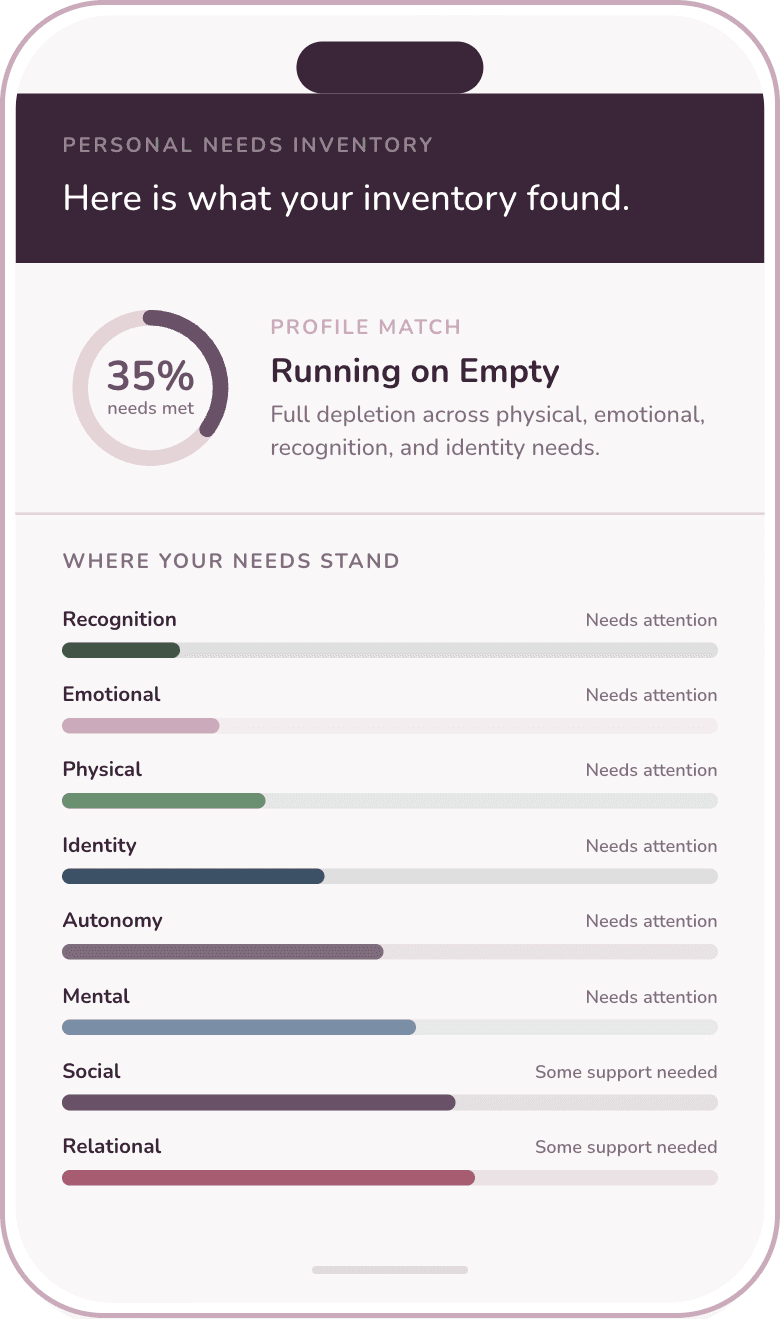
~5 minFreePersonal Needs Inventory
For the mom running on empty. Map which of your needs are going unmet, and get a profile of what refilling your cup could look like.



What clients say
Mom-centered, judgment-free care on your terms.
“I was struggling so much and feeling extremely overwhelmed as a new mother when I discovered Momwell. I thought I was the only one struggling and that there was something wrong with me for not being able to handle it all. After listening to the podcast, I’m feeling so much more like myself again! Motherhood is still hard, but I feel like I can finally breathe and enjoy it. Thank you, Erica!”
“I’d just gotten done crying after yelling at my children for the 100th time that day, feeling like I was a terrible mother, when I found the Mom Rage course. It was so comforting to hear people talking about exactly what I was going through–with NO judgment. I left with the tools I needed to recognize when I’m getting overwhelmed and bring myself back down. Our lives have gotten so much easier–I’m so grateful to Momwell!”