
What is postpartum depression?
Postpartum depression is a mood disorder that many moms experience within the first 12 months postpartum, though it can persist much longer without treatment. It is a valid, treatable challenge that impacts emotional well-being, relationships, and the ability to enjoy motherhood.
Struggling with sadness, hopelessness, or feeling disconnected after having a baby? Postpartum depression is common, but you don’t have to face it alone.

What it looks like
You might be struggling with postpartum depression if...
Postpartum depression can show up differently for everyone. You might benefit from therapy if you’re:

Common questions

What is your postpartum depression telling you?
Postpartum depression is a signal that a heavy, demanding season has outrun the support you have, and it deserves care.
- It can arrive anytime in the first yearPostpartum depression can develop any time within the first twelve months after birth, not just in the early weeks. The baby blues usually lift on their own within two to three weeks, so when the heaviness lingers past that, it is worth paying attention to.
- It touches more than your moodIt can reach into your relationships, your sense of self, and your ability to enjoy the moments you hoped to savor. Persistent sadness, irritability, trouble bonding, and feelings of guilt or worthlessness are some of the ways it shows up.
- Reaching out early changes the roadSeeking help early can ease the weight before it settles in for the long haul. Support helps moms feel more like themselves again, sooner than white-knuckling through it alone ever would.



Does feeling this way make me a bad mom?
Postpartum depression is a common, treatable challenge, not a measure of your worth as a parent, and reaching for support is an act of love for yourself and your family.


Isn’t this just the baby blues that will go away on its own?
The baby blues usually pass on their own in a couple of weeks. When the heaviness stays longer than that, it isn’t something you have to wait out alone.
- The baby blues lift quicklyThe teariness and mood swings of the baby blues tend to ease on their own within the first two to three weeks. When the low feelings stretch well past that window, they are pointing to something that deserves more than patience.
- Untreated, it can linger for yearsWithout support, postpartum depression can linger far longer than the early weeks. Research following thousands of mothers has found symptoms lasting up to three years for some, and as many as half of all cases are never identified or treated. That is exactly why reaching out early matters.
- Naming it early changes how long you carry itWaiting rarely makes the heaviness lighter on its own. Reaching out sooner means the support can start working sooner, so you spend less of this season feeling unlike yourself.
Key terms
The language of postpartum depression
Postpartum moods get lumped together, but the words mean different things. Naming what you are feeling is the first step to getting the right kind of support.
- What is postpartum depression?
- A mood condition that can develop within the first year after birth: persistent sadness, hopelessness, numbness, irritability, or feeling disconnected that gets in the way of daily life. It is common, it is valid, and it is treatable with support.
- What is the difference between the baby blues and postpartum depression?
- The baby blues are the teariness and mood swings many moms feel in the first couple of weeks after birth, and they usually lift on their own. When the heaviness lingers longer than that, runs deeper, and starts to crowd out daily life, that is when it may be postpartum depression and worth reaching out about.
- What is postpartum anxiety?
- Excessive worry, racing thoughts, and a sense of dread or being constantly on edge after having a baby. It often travels alongside postpartum depression, and like depression it is common and responds well to support.
- How long does postpartum depression last?
- There is no single timeline, and it is not something you have to wait out alone. With support many moms start to feel more like themselves sooner, while left unsupported the heaviness can linger far longer than it needs to.
Free tool
~5 minFreePersonal Needs Inventory
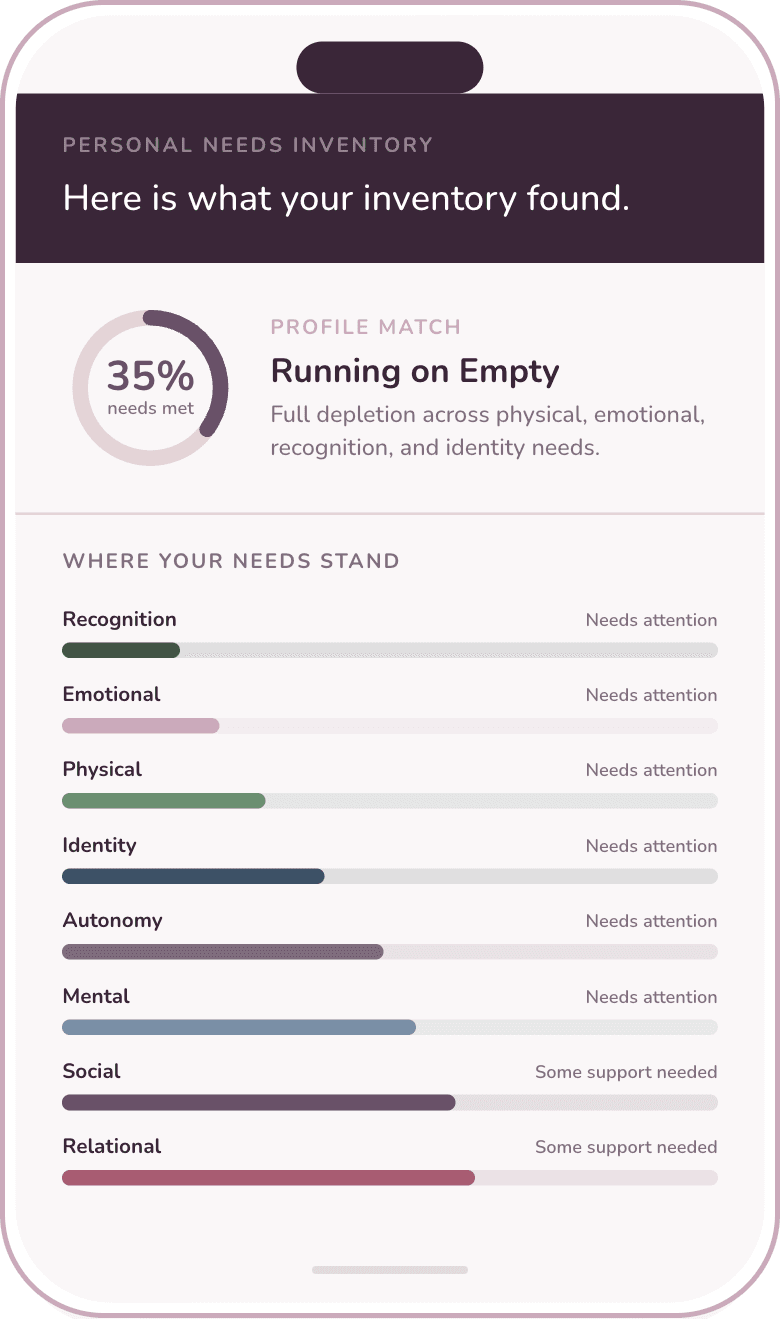
You already know something is off. The Personal Needs Inventory helps you get specific about what it is, across eight areas of your life, so you can finally see where to start.
So much of postpartum depression grows in the gap between everything you are carrying and the support you actually have. This is the quickest way to see that gap clearly, without judgment.
You leave with a snapshot of where you are most depleted and a few concrete places to start, so this season has a little more room to breathe.

I’m months postpartum. Is it too late for this to be PPD?
Postpartum depression doesn’t have a tidy expiry date, and it is never too late to reach for support.
- It can develop across the whole first yearPostpartum depression can surface any time within the first twelve months after birth, not only in the newborn haze. The low mood arriving later does not make it any less real or less worth tending to.
- When it began matters more than when you name itWhat matters is whether the heaviness took root in that first year, not how many months pass before you talk about it. Coming to it later is common, and it does not close the door on care.
- Support helps whenever you reach for itThere is no point on the calendar where it becomes too late to feel better. Whenever you decide to reach out, that is the right time to start.
How therapy helps
Momwell can help you
Our therapists are here to listen without judgment, helping you untangle your emotions and make sense of what this season has asked of you.

Understand what you’re feeling
Our therapists are here to listen without judgment, helping you untangle your emotions and make sense of what this season has asked of you.
Rebuild connections
Therapy offers tools to repair and rebuild connections with yourself, your baby, your partner, and other children. You’ll learn how to nurture these relationships and rediscover the joy you hoped for in motherhood, even if it feels distant right now.
Manage overwhelming emotions
We’ll help you navigate the heavy emotions like sadness, frustration, or anxiety, offering practical strategies that work for your unique experience.
Replace guilt with compassion
You deserve kindness, especially from yourself. Together, we’ll work to replace guilt and shame with self-compassion and understanding.
Adjust to life after baby
Motherhood changes everything. We’ll support you in managing sleep deprivation and creating a system of care and support that meets your needs.
Protect your future well-being
Taking care of yourself now is an investment in your future and your child’s future. When a mom is well, her family thrives. Therapy helps you heal, grow, and feel whole again, ensuring a stronger foundation for everyone you care about.
Free tools and resources
Learn more about postpartum depression, free and at your own pace.



What clients say
Mom-centered, judgment-free care on your terms.
“I was struggling so much and feeling extremely overwhelmed as a new mother when I discovered Momwell. I thought I was the only one struggling and that there was something wrong with me for not being able to handle it all. After listening to the podcast, I’m feeling so much more like myself again! Motherhood is still hard, but I feel like I can finally breathe and enjoy it. Thank you, Erica!”
“I’d just gotten done crying after yelling at my children for the 100th time that day, feeling like I was a terrible mother, when I found the Mom Rage course. It was so comforting to hear people talking about exactly what I was going through–with NO judgment. I left with the tools I needed to recognize when I’m getting overwhelmed and bring myself back down. Our lives have gotten so much easier–I’m so grateful to Momwell!”