
What is birth trauma?
Birth trauma refers to emotional distress or mental health challenges following a difficult, unexpected, or traumatic childbirth experience. It can affect how you feel about yourself, your baby, or your birth story.
It is defined by how the experience felt, not by what the chart says. A birth can be medically "successful" and still have been overwhelming, frightening, or out of your control, and the mark that leaves is real.

What it looks like
You might be struggling with birth trauma if you...
Birth trauma can show up in many ways. Any of these can be part of it:

Common questions

Does birth trauma only happen with emergencies or complications?
Birth trauma is about how the experience felt, not whether anything went medically wrong. A birth can look fine on paper and still leave a real mark.
- It is about how it felt, not how it lookedA birth can be overwhelming, frightening, or out of your control without ever becoming an emergency. What your body and mind register as traumatic does not need a medical label to be real and worth tending to.
- It has many possible rootsBirth trauma can grow from physical complications, medical interventions, overwhelming pain, not having your voice heard, or a sense of powerlessness during childbirth. Any of these can stay with you long after the birth itself is over.
- More common than anyone says out loudBirth trauma affects up to 45% of birthing people, even if so few moms ever talk about it. It is a valid, treatable experience, and support is available whenever you are ready for it.



I had a healthy baby, shouldn’t I just be grateful?
Your feelings about your birth matter, and a healthy baby doesn’t erase the impact of a hard experience. Comparing your pain to worse stories, or minimizing what you went through because the outcome was good, only buries it. You are allowed to be grateful for your baby and still need to heal from how they arrived.


Will talking about my birth trauma make it worse?
Avoiding the memory tends to keep it loud. Processing it gently, with support, is what helps it loosen its grip.
- Putting words to it makes it less overwhelmingPutting words to what happened, at your own pace and in a safe space, helps drain some of the emotional intensity out of the memory. It is the opposite of being forced to relive it.
- You leave with tools, not just the storyTherapy is not only talking, it is learning ways to soothe your body and mind when the memory surfaces. Over time the moments that used to flood you start to feel more manageable.
- Reaching out is a sign of strengthBirth trauma is not your fault, and wanting support to heal from it is not a failing. Asking for help is part of showing up as the mom you want to be.
Key terms
The language of birth trauma
A hard birth can be difficult to put into words. These are the terms that make birth trauma easier to name and to talk about.
- What is birth trauma?
- Emotional distress or mental health challenges that follow a difficult, unexpected, or frightening childbirth experience. It can affect how you feel about yourself, your baby, or your birth story, and it is a valid, treatable response.
- What makes a birth traumatic?
- A birth that felt overwhelming, frightening, or out of control, whether or not it involved an emergency or complications. A birth can be medically successful and still leave a lasting emotional mark.
- What is birth-related PTSD?
- A pattern some moms experience after a traumatic birth, where the distress lingers as flashbacks, nightmares, avoidance, or heightened anxiety. It is a recognized, treatable response to what your body and mind moved through, not a weakness.
- Can medical procedures during birth cause trauma?
- Trauma that develops from the medical experience itself: an emergency intervention, a rushed procedure, feeling unheard, or having decisions made without your consent. It is a recognized form of birth trauma, and it can shape how safe future medical care feels until it is processed.

Is it too late to get help for my birth trauma?
There is no expiry date on healing. Whether your birth was months or years ago, support can still help you feel better.
- The effects can linger for yearsBirth trauma can stay with you long after the birth itself, sometimes quietly shaping how you feel for years. Carrying it this long does not mean you are stuck with it.
- Healing can start whenever you are readyIt is never too late to begin feeling better, and you do not need a fresh crisis to deserve support. The right moment to reach out is simply whenever you decide you want to.
- It can change how the future feelsIf a past birth is shaping how you feel about having another child, processing it can ease some of that weight. Many moms find more room to consider what comes next once the old experience feels less raw.
How therapy helps
Momwell can help you
Our therapists provide a safe space to explore your experience, helping you make sense of what happened and validate your feelings.

Process your birth story
Our therapists provide a safe space to explore your experience, helping you make sense of what happened and validate your feelings.
Heal from emotional distress
We’ll guide you through tools to reduce the intensity of flashbacks, nightmares, and other symptoms of trauma.
Rebuild emotional connections
Therapy helps you reconnect with your baby, your partner, and yourself, strengthening these relationships after a difficult birth.
Let go of guilt and shame
We’ll support you in challenging self-blame and embracing compassion for yourself as you navigate this healing journey.
Restore your sense of safety
Learn strategies to calm your body and mind, creating a foundation for emotional recovery and resilience.
Prepare for future experiences
If you’re considering future pregnancies, we can help you create a plan to feel empowered and supported.
Free tools and resources
Learn more about healing from birth trauma, free and at your own pace.
Free tool
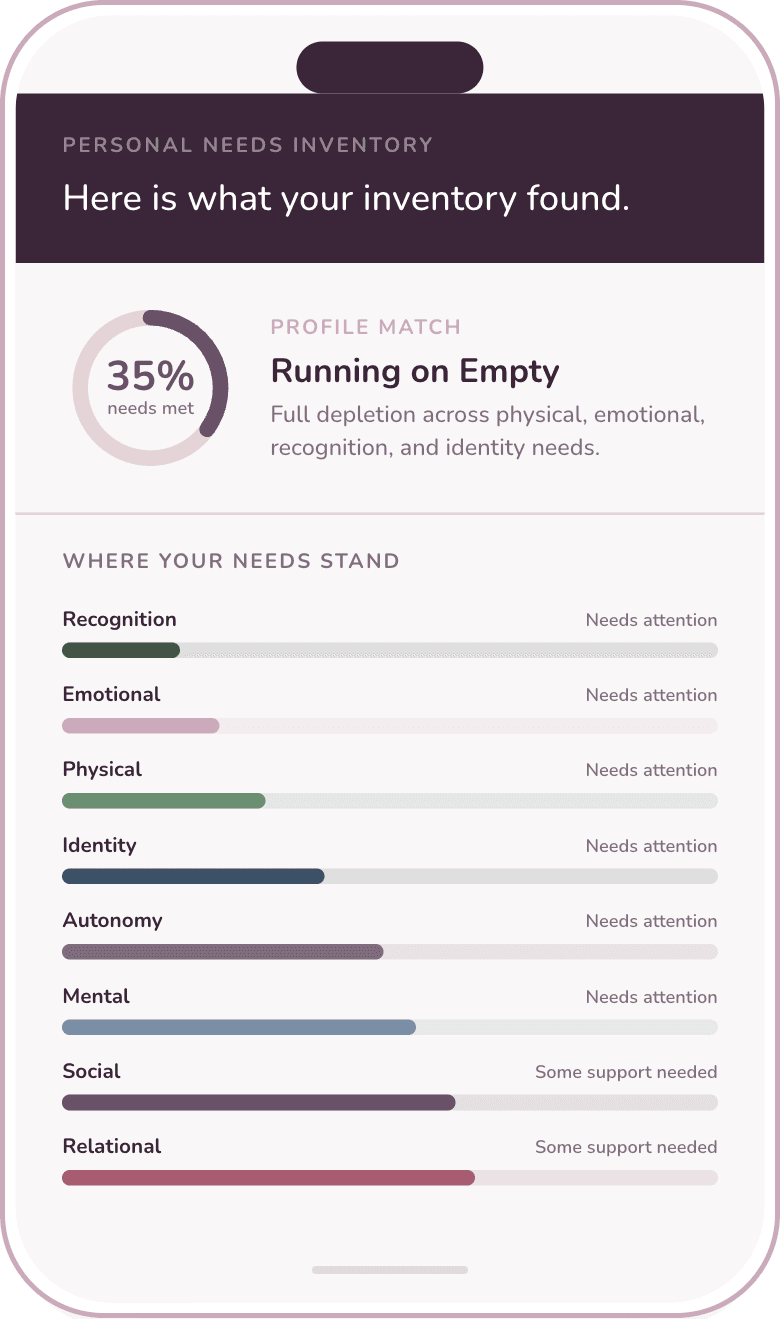
~5 minFreePersonal Needs Inventory
You already know something is off. The Personal Needs Inventory helps you get specific about what it is, across eight areas of your life, so you can finally see where to start.



What clients say
Mom-centered, judgment-free care on your terms.
“I was struggling so much and feeling extremely overwhelmed as a new mother when I discovered Momwell. I thought I was the only one struggling and that there was something wrong with me for not being able to handle it all. After listening to the podcast, I’m feeling so much more like myself again! Motherhood is still hard, but I feel like I can finally breathe and enjoy it. Thank you, Erica!”
“I’d just gotten done crying after yelling at my children for the 100th time that day, feeling like I was a terrible mother, when I found the Mom Rage course. It was so comforting to hear people talking about exactly what I was going through–with NO judgment. I left with the tools I needed to recognize when I’m getting overwhelmed and bring myself back down. Our lives have gotten so much easier–I’m so grateful to Momwell!”