
What is postpartum anxiety?
Postpartum anxiety is a common challenge that many moms face, often marked by excessive worry, fear, or racing thoughts. Unlike the typical concerns of motherhood, postpartum anxiety can feel relentless and interfere with your ability to rest or enjoy time with your baby.
It often shows up as a mind that will not switch off: checking the baby’s breathing again, replaying the day’s small decisions, bracing for something to go wrong. The worry runs louder than the situation calls for, and no amount of reassurance seems to quiet it for long.

What it looks like
You might be struggling with postpartum anxiety if...
Postpartum anxiety can show up in many ways. You might benefit from therapy if you’re:

Common questions

Why do I feel so anxious as a new mom?
Feeling intensely anxious as a new mom is a common response to a body in upheaval, broken sleep, and the enormous new responsibility of keeping a baby safe.
- It can go beyond ordinary worryPostpartum anxiety involves excessive worry, fear, or racing thoughts that go past the typical concerns of new motherhood. When it tips over, it can feel relentless and hard to switch off, even when nothing is wrong.
- It can live in your bodyAnxiety doesn’t stay in your head, and it can show up as restlessness, fatigue, or tension you carry physically. Intrusive thoughts are common too, and they do not reflect your desires or your intentions.
- More common than moms admitPostpartum anxiety affects up to 10% of moms, and it is highly treatable with therapy. Seeking help early can keep symptoms from worsening and help you feel like yourself again.



Is it normal to feel this anxious after having a baby?
Some worry comes with the territory, but anxiety that feels relentless and gets in the way of rest is worth taking seriously, and it isn’t something you have to carry alone.


Isn’t worrying just part of being a mom?
Some worry is a normal part of caring for a new baby. The difference is how heavy it feels and how much room it takes up in your day.
- Ordinary worry tends to settleEveryday concern usually eases once you have reassurance or a plan in place. It rises with a specific situation and then quiets down again instead of running on a loop.
- Anxiety can take overPostpartum anxiety can feel overwhelming and start to interfere with daily life, sleep, and the moments you want to enjoy with your baby. When the worry stops switching off, that is a sign it deserves attention.
- It can be worked withYou don’t have to white-knuckle through it or wait for it to pass on its own. Therapy can help you manage it effectively and find steadier ground.
Key terms
The language of postpartum anxiety
These words get used interchangeably, but they describe different experiences. Naming what you are feeling is the first step toward the right kind of support.
- What is postpartum anxiety?
- Excessive worry, fear, or racing thoughts after having a baby that go beyond the typical concerns of motherhood. It can feel relentless and get in the way of rest, and it is common and responds well to support.
- What is the difference between postpartum anxiety and normal new-parent worry?
- Some worry is a natural part of caring for a new baby and tends to settle once you have reassurance or a plan. Postpartum anxiety is different in degree: the worry feels constant, hard to switch off, and starts interfering with sleep, rest, or enjoying your baby.
- What are intrusive thoughts?
- Unwanted, often distressing thoughts or images that pop into your mind uninvited and feel scary precisely because they are so unlike you. They are common in the postpartum period and do not reflect your desires or intentions.
- What is postpartum rage?
- Intense, often overwhelming anger that can surface after having a baby, sometimes alongside anxiety. Like postpartum anxiety, it is a response to exhaustion, hormonal shifts, and unmet needs.
Free tool
~5 minFreePersonal Needs Inventory
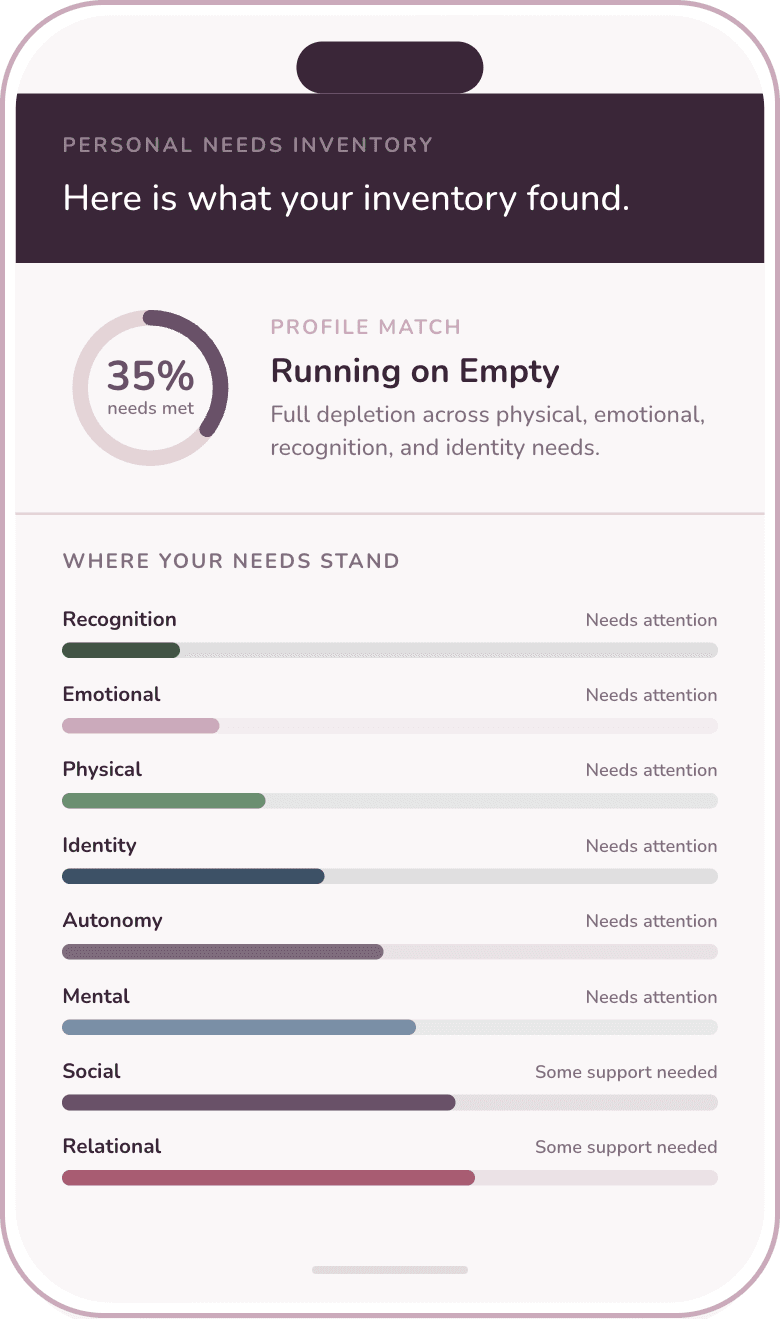
You already know something is off. The Personal Needs Inventory helps you get specific about what it is, across eight areas of your life, so you can finally see where to start.
Anxiety so often grows in the gap between what you are carrying and what you are getting. This is a gentle way to see that gap clearly, without any judgment.
You leave with a snapshot of where you are depleted and a few concrete places to start, so the next anxious moment has a little more room around it.

Is it too late for therapy if I’m already months postpartum?
There is no window you have to catch, and reaching out months in is just as worthwhile as reaching out in the early weeks.
- It doesn’t follow a timelinePostpartum anxiety can surface anytime in the first year and beyond, not only in the newborn haze. Arriving later doesn’t make it any less real or any less worth treating.
- It can linger when ignoredLeft unaddressed, the worry can persist and quietly wear you down over time. Naming it, whenever it shows up, is what starts to change how long you carry it.
- Help still helps, months inIt is never too late to seek support and feel better. Wherever you are in the first year or beyond, there is room to feel more like yourself.
How therapy helps
Momwell can help you
Our therapists help you make sense of your feelings and understand the root causes of your anxiety, with someone who has seen this season up close.

Understand postpartum anxiety
Our therapists help you make sense of your feelings and understand the root causes of your anxiety, with someone who has seen this season up close.
Develop tools to quiet racing thoughts
Learn strategies to manage intrusive thoughts and bring calm to your mind, even in overwhelming moments.
Navigate fear and avoidance
Therapy helps you confront fears and rebuild confidence, empowering you to engage in everyday life without constant worry.
Create space for self-compassion
We’ll guide you in letting go of perfectionism and self-doubt, replacing them with self-kindness and understanding.
Address physical symptoms
Postpartum anxiety often shows up in your body. Our therapists provide tools to ease symptoms like restlessness, tension, and fatigue.
Support your emotional and physical recovery
Taking care of your mental health supports your overall well-being and strengthens your ability to care for your family.
Free tools and resources
Learn more about postpartum anxiety, free and at your own pace.



What clients say
Mom-centered, judgment-free care on your terms.
“I was struggling so much and feeling extremely overwhelmed as a new mother when I discovered Momwell. I thought I was the only one struggling and that there was something wrong with me for not being able to handle it all. After listening to the podcast, I’m feeling so much more like myself again! Motherhood is still hard, but I feel like I can finally breathe and enjoy it. Thank you, Erica!”
“I’d just gotten done crying after yelling at my children for the 100th time that day, feeling like I was a terrible mother, when I found the Mom Rage course. It was so comforting to hear people talking about exactly what I was going through–with NO judgment. I left with the tools I needed to recognize when I’m getting overwhelmed and bring myself back down. Our lives have gotten so much easier–I’m so grateful to Momwell!”