
What are intrusive thoughts?
Intrusive thoughts are unwanted, distressing thoughts or images that pop into your mind. Common in the postpartum period, they can feel alarming but don’t reflect your desires or intentions.
Scary, unwanted thoughts can feel overwhelming and isolating, but upwards of 90% of new parents experience them. Having one says nothing about who you are as a mother.

What it looks like
You might be struggling with intrusive thoughts if...
Intrusive thoughts can appear in different ways. Any of these can be part of it:

Common questions

Does having intrusive thoughts mean I’ll act on them?
Intrusive thoughts are not intentions. They are distressing precisely because they go against everything you value most.
- A thought is not a planAn unwanted image flashing through your mind is the opposite of a desire to act. The gap between the thought and your true intentions is exactly why it horrifies you.
- Being horrified shows how far it is from youThe fact that the thought scares and disgusts you is your values speaking, loud and clear. Moms who have these thoughts are reacting against them, not moving toward them.
- It stops feeling like a threat over timeOnce you can see the thought as automatic mental noise rather than a real intention, it loses its grip. What used to feel like a threat starts to feel like passing static.



Why do I have scary thoughts about my baby getting hurt?
Because your brain is working overtime to keep your baby safe. A sudden, scary image of harm is unwanted and distressing, which is the very opposite of a wish or a plan.
- Your alarm system is working overtimeA protective brain on high alert flashes worst-case scenarios precisely because your baby matters so much to you. The horror you feel about the thought shows how deeply you care, and how far the thought sits from anything you would ever do.
- These thoughts are commonScary, unwanted thoughts about harm reach the vast majority of new parents in the postpartum period. Common does not mean you have to suffer through them, they respond to the right support.
- They spike when you are depletedBroken sleep, stress, and the hormonal upheaval of the postpartum period all turn the volume up on intrusive thoughts, which is why the newborn months are their peak season. Rest and support turn it back down.


Do intrusive thoughts mean I’m a bad mom?
Intrusive thoughts are random and automatic, and they don’t reflect your intentions or your character in any way.
- You did not choose the thoughtIntrusive thoughts arrive on their own, without your consent and against your values. You cannot be judged for a thought you never wanted in the first place.
- Judging yourself for it keeps it stuckThe shame spiral after the thought is often more painful than the thought itself. Meeting it with understanding instead of self-judgment is what starts to break the loop.
- They respond to supportIntrusive thoughts are treatable, and a specialist who understands them can help you loosen their grip. You do not have to white-knuckle your way through this alone.
Key terms
The language of intrusive thoughts
These thoughts feel impossible to say out loud, which is exactly why naming them helps. Here is what the words mean, in plain and gentle terms.
- What are intrusive thoughts?
- Unwanted, distressing thoughts or images that pop into your mind without warning, often about harm coming to your baby. They are automatic and do not reflect your desires or intentions, which is exactly why they feel so upsetting.
- Why do I have scary thoughts about my baby getting hurt?
- A protective brain on high alert in the postpartum period can flash worst-case images precisely because keeping your baby safe matters so much to you. The fear you feel about the thought is a sign of your love, not a sign that you would ever act on it.
- What is postpartum OCD?
- When intrusive thoughts become frequent and sticky, some moms develop repetitive worries and checking or avoiding to try to feel safe. It is common, it is treatable, and naming it with a specialist who understands it brings real relief.
- What is the difference between intrusive thoughts and postpartum psychosis?
- Intrusive thoughts are unwanted and frightening, the opposite of something you want, which is what makes them so distressing. Postpartum psychosis is rare and different: it can involve thoughts that feel true or commanding, confusion, not needing sleep, or losing touch with what’s real, and it needs prompt medical care.

How do I make intrusive thoughts stop?
Not by force. Trying to suppress an intrusive thought usually makes it louder and more persistent, not quieter.
- Suppression backfiresThe harder you push a thought away, the more your mind circles back to check that it is gone. Effort and willpower are the wrong tools for this particular job.
- Avoidance feeds the cycleSteering around the diaper change, the bath, or the stairs to dodge the thought only teaches your brain the danger is real. The relief is brief, and the fear comes back larger.
- Let it pass instead of fighting itAcknowledging the thought, letting it drift through, and carrying on with what you were doing takes the power out of it. It is gentler and far more effective than trying harder.
Course
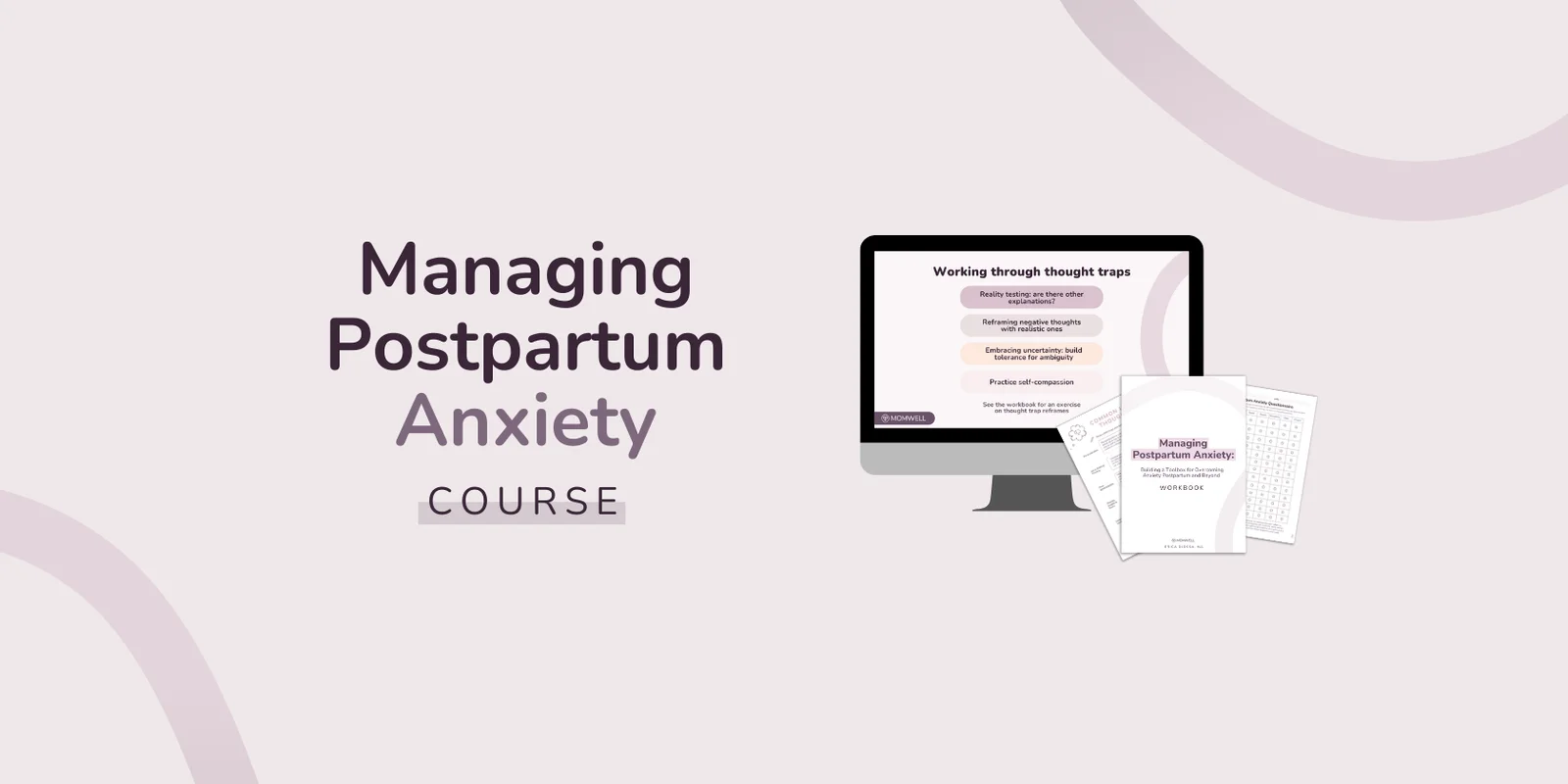
$127 USD6 modulesManaging Postpartum Anxiety
Society has normalized mom worry, but there is a difference between typical worry and the suffocating experience of postpartum anxiety, including intrusive thoughts, over-researching, and avoiding daily activities out of fear.
This 6-module course, taught by Erica Djossa, gives you the tools to manage symptoms, reframe your thoughts, and cope with anxiety in the postpartum period and beyond.
Free tools and resources
Learn more about intrusive thoughts, free and at your own pace.



What clients say
Mom-centered, judgment-free care on your terms.
“I was struggling so much and feeling extremely overwhelmed as a new mother when I discovered Momwell. I thought I was the only one struggling and that there was something wrong with me for not being able to handle it all. After listening to the podcast, I’m feeling so much more like myself again! Motherhood is still hard, but I feel like I can finally breathe and enjoy it. Thank you, Erica!”
“I’d just gotten done crying after yelling at my children for the 100th time that day, feeling like I was a terrible mother, when I found the Mom Rage course. It was so comforting to hear people talking about exactly what I was going through–with NO judgment. I left with the tools I needed to recognize when I’m getting overwhelmed and bring myself back down. Our lives have gotten so much easier–I’m so grateful to Momwell!”