
What is reproductive mental health?
Reproductive mental health is the lens that connects how you feel to the hormonal and reproductive changes that move through a woman’s life. It recognizes that the same shifts in estrogen and progesterone that shape the menstrual cycle, pregnancy, the postpartum period, and the years around menopause can also shape mood, anxiety, sleep, and the sense of feeling like yourself.
These are not separate, unrelated struggles. They are points along one arc, and several of them are windows where mood is more vulnerable to change. The menstrual cycle, the perinatal period of pregnancy and postpartum, and the transition into menopause are each times when hormonal change and mental health are closely linked, and each responds to support.

What it looks like
This lens might fit if you...
Reproductive mental health can show up in many forms across the years. You might find this lens useful if you:

Common questions


Can my hormones really affect my mood?
The same hormones that shape reproductive life also interact with the brain systems that influence mood, anxiety, and sleep.
- Hormones interact directly with brain chemistryEstrogen and progesterone do not act on the body alone. They interact with the brain chemistry that helps regulate mood and stress, so when they shift, feelings can shift too.
- Sensitivity varies from person to personSome people barely notice hormonal change, and others feel it strongly. Being more sensitive to these shifts is a real difference in biology, not a flaw in character.
- It deserves to be taken seriouslyFeeling dismissed with “it is just hormones” misses the point. The hormonal link is exactly why these mood changes are worth understanding and supporting.


Am I just imagining this, or making too much of it?
You are not imagining it. Mood changes tied to hormonal transitions are real and well-recognized, and noticing the pattern is a strength, not an overreaction. You do not have to wait until it gets unbearable to deserve support.


Why do my mood changes line up with my cycle?
For many people, mood tracks the hormonal phases of the menstrual cycle, often peaking in the days before a period and easing once it begins.
- A pattern you can sometimes predictWhen low mood, anxiety, or irritability cluster in the same phase each month, the timing itself is information. Tracking it can make the pattern visible instead of confusing.
- There is a spectrum hereMilder cyclical changes are often called PMS. A more severe, clearly cyclical pattern may be PMDD, and an existing condition that worsens premenstrually is called PME.
- Sorting it out is a clinical questionThese patterns can look similar from the inside. A clinician can help tell them apart and talk through options, rather than leaving you to guess.
Key terms
The language of reproductive mental health
A few terms make this lens easier to see and to talk about. These are plain-language descriptions, not diagnoses, and a clinician is the right person to help sort out what fits you.
- What is reproductive mental health?
- The connection between mood and mental health and the hormonal transitions across a woman’s life, from the menstrual cycle to pregnancy and postpartum to perimenopause and menopause. It treats these as linked windows rather than separate, unrelated struggles.
- What is PMDD?
- Premenstrual dysphoric disorder is a severe, cyclical pattern of mood symptoms such as deep low mood, anxiety, or irritability that arrive in the days before a period and lift soon after it begins. It is more intense than typical PMS, and a clinician can help confirm whether it fits.
- What is premenstrual exacerbation (PME)?
- When an existing mental-health condition, such as depression or anxiety, predictably worsens in the premenstrual phase of the cycle and eases afterward. It differs from PMDD because the symptoms are present across the month and intensify with the cycle, rather than appearing only before a period.
- How does perimenopause affect mood?
- Perimenopause is the transition leading up to menopause, often in the forties, when hormone levels fluctuate before settling. Those shifts can bring changes in mood, anxiety, irritability, and sleep, sometimes years before periods stop, which is part of why they are easy to overlook.

Why are pregnancy and postpartum high-risk times for mental health?
Pregnancy and postpartum bring some of the largest hormonal shifts in a person’s life, alongside sleep loss, recovery, and a changing sense of self.
- The change is hormonal and moreEstrogen and progesterone swing dramatically across pregnancy and after birth. Stacked with exhaustion and a new identity, that makes this a window where mood is more vulnerable.
- These struggles are commonPerinatal mood and anxiety changes affect a large share of parents. Feeling them does not mean you are doing motherhood wrong or that you love your baby any less.
- Early support mattersPerinatal mental-health changes respond well to support, and reaching out sooner tends to help more. You do not have to wait for a crisis to deserve care.
Free tool
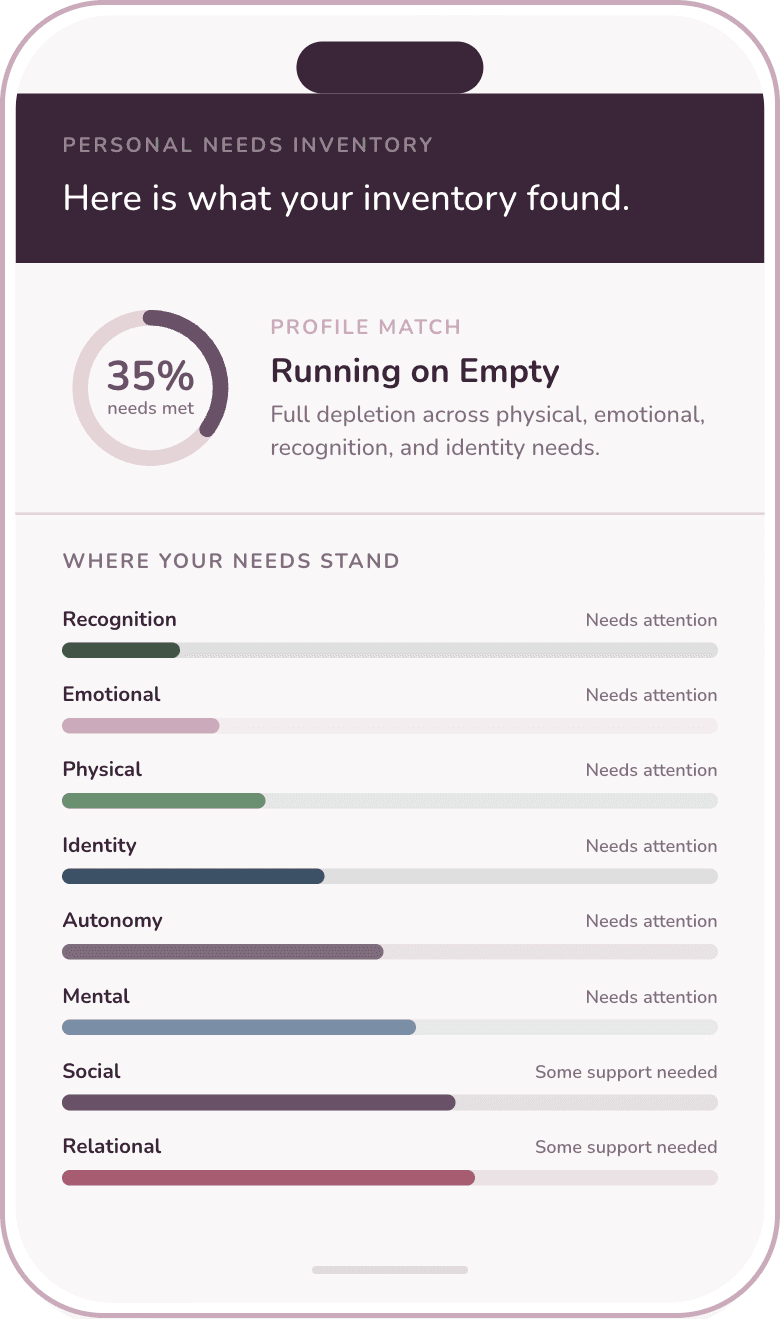
~5 minFreePersonal Needs Inventory
You already know something is off. The Personal Needs Inventory helps you get specific about what it is, across eight areas of your life, so you can finally see where to start.
Wherever you are on this arc, depletion makes every hormonal shift harder to weather. This is a quick, judgment-free way to see where you are most stretched.
You leave with a snapshot of where you are running low and a few concrete places to start, so you are not carrying it all in your head.
How therapy helps
Momwell can help you
Our therapists offer a nonjudgmental space to make sense of how your mood and your reproductive life are connected, and to find support that fits the window you are in.

Make sense of the pattern
Therapy gives you a place to look at how your mood moves with your cycle, your pregnancy or postpartum season, or the transition toward menopause, so the pattern feels less confusing.
Feel believed, not dismissed
So many women are told it is just stress or just hormones. Here, the connection between your hormones and your mental health is taken seriously from the start.
Build tools that travel with you
You can learn ways to steady yourself through hormonal shifts, from managing anxiety and low mood to protecting your sleep and your sense of self.
Get support through the perinatal window
Pregnancy and postpartum are high-risk times for mood and anxiety, and our maternal mental health therapists specialize in meeting parents there.
Find the right next step
Therapy can help you understand what you are noticing and, when a medical question comes up, point you toward the right kind of clinician alongside it.
Replace self-blame with self-compassion
Together you can trade shame and self-blame for understanding, and build a plan that respects what you are carrying.
Does menopause affect mental health?
It can. The hormonal fluctuations of perimenopause and menopause can bring changes in mood, anxiety, irritability, and sleep.
- It can start earlier than expectedPerimenopause can begin years before periods stop, often in the forties. New mood or anxiety changes in this stage are easy to overlook because the hormonal cause is not obvious.
- It is more than mood aloneSleep disruption, irritability, and a sense of not feeling like yourself often travel together in this transition, and they can feed one another.
- You do not have to just endure itFeeling unlike yourself in midlife is not something to white-knuckle through. A clinician can help you make sense of it and look at what support fits.

Free tools and resources
Start where you are, free and at your own pace.


What clients say
Mom-centered, judgment-free care on your terms.
“I was struggling so much and feeling extremely overwhelmed as a new mother when I discovered Momwell. I thought I was the only one struggling and that there was something wrong with me for not being able to handle it all. After listening to the podcast, I’m feeling so much more like myself again! Motherhood is still hard, but I feel like I can finally breathe and enjoy it. Thank you, Erica!”
“I’d just gotten done crying after yelling at my children for the 100th time that day, feeling like I was a terrible mother, when I found the Mom Rage course. It was so comforting to hear people talking about exactly what I was going through–with NO judgment. I left with the tools I needed to recognize when I’m getting overwhelmed and bring myself back down. Our lives have gotten so much easier–I’m so grateful to Momwell!”