

The short answer
If you're under 35 and have been trying for 12 months, or 35 or older and trying for 6 months, it's time to see a fertility specialist. Seek help sooner if your periods are irregular, sex is painful, or you have a history of endometriosis or abdominal surgery. Infertility affects about 1 in 5 couples and isn't your fault. Getting evaluated early means you can act on real data instead of waiting and worrying.
Listen to Episode 50 · with Dr. Natalie Crawford
Trying to conceive can be stressful—especially when pregnancy doesn’t happen as soon as you would like. Struggling with infertility or secondary infertility often leaves you confused, unsure, and left with plenty of questions. When can you see a specialist? What causes it? Why is secondary infertility so common?
Today, I’m joined by OB-GYN and reproductive endocrinologist Dr. Crawford, to answer all your questions about infertility and secondary infertility.
The Puzzle of Infertility
Struggling to conceive can be an isolating and painful experience. We often blame ourselves or wonder what we’re doing wrong. But infertility and secondary infertility are not our fault.
Dr. Crawford became drawn to the field of infertility during her OB-GYN residency. Specializing in infertility gave her the opportunity to help and support women, and provided an outlet for a lifelong love of science.
To Dr. Crawford, infertility is like a big puzzle. And the more we understand all the components at play, the more we can help couples overcome their struggles and increase their chances of conceiving.
She believes that it’s important to talk about infertility. People are opening up about their experiences more than ever before—and it can be helpful to feel like we aren’t the only ones going through it.
It can be painful when moms feel like they’re alone—especially when they see friends and family members become moms and grow their families. But it is an experience that so many people struggle with.
I was thrilled to get the chance to chat with Dr. Crawford and hear her insights on infertility, secondary infertility, freezing eggs, and so much more!
How Common Infertility Is (and What Causes It)
Infertility is something people don’t like to talk about—but it’s much more common than most people realize.
In recent years, the numbers of couples struggling to conceive has increased. Currenlty, 1 in 5 couples experience infertility.
Dr. Crawford said that ovulation issues are one of the top causes of infertility. Irregular or unpredictable periods can be a sign that there is an ovulation issue happening. There are also anatomical issues, such as tubal blockages or uterine abnormalities.
There can also be a problem with sperm. Dr. Crawford pointed out that the phrase “it only takes one sperm” doesn’t capture the full picture—in reality, we need an army of quality sperm moving in the right direction with enough force to crack open an egg.
There are other factors at play that might impact fertility or overall reproductive health—including consumption of toxins (like cigarettes), stress, sleep, or environmental factors (such as BPA or plastics).
Dr. Crawford pointed out that these things can impact your reproductive health in the long run—not just in a given moment. For example, if you smoke cigarettes, you are likely to have an increase in genetic abnormalities in your eggs. Because of this, you will probably have lower-quality eggs and run out of eggs faster.
25-30% of infertility cases are unexplained.
But there are also many cases of infertility that have no explanation that we can find—25-30% of infertility cases are unexplained. Dr. Crawford said that it’s hard to experience this, because as humans we love to think critically and find solutions. It’s hard to not get answers.
When You Should Seek Help for Infertility
Dr. Crawford said that the classic definition of infertility is when a woman is less than 35 and has been actively trying for 12 months but failed to conceive, or a woman who is 35 or older and has been trying unsuccessfully for six months.
But she pointed out that this definition doesn’t account for so many factors. For example, if you aren’t having regular periods, it’s a clear indicator that something is off—so it doesn’t make sense to wait an entire year to seek help. That just means a year of waiting to treat something that needs to be addressed.
Dr. Crawford said that if you want to get pregnant and your periods are irregular, your partner struggles to maintain an erection, or sex is painful, you should talk to a fertility doctor right away. You don’t have to just let time pass and do nothing.
She also said that if you have a history of potential abnormalities in your body—such as scar tissue in the fallopian tubes, history of chlamydia, history or suspicion of endometriosis, or history of multiple abdominal surgeries, you should also consider seeking a specialist earlier.
Sometimes abdominal conditions that aren’t directly tied to reproduction, such as an appendix rupturing, can cause blockages in your fallopian tubes.
Dr. Crawford pointed out that the sooner testing begins, the sooner treatment plans can be put into action. She believes it’s never too early to get an evaluation—you can’t make decisions on data you don’t know.
It’s never too early to get an evaluation—you can’t make decisions on data you don’t know.
In some cases, you might receive a normal evaluation and your doctor will encourage you to go ahead and try for 12 months before moving further. But in some cases, the cause can be uncovered right away.
Waiting for 12 months can also have an impact on your mental health. There is often a great deal of anxiety, worry, and grief when navigating infertility. Seeking help earlier might help you avoid some of the emotional turmoil involved.
When Should You Consider Freezing Your Eggs
The process of freezing your eggs has become more popular in recent years, likely fueled by people opting to have babies later in life.
Dr. Nicole said that age is a big factor in egg health. There isn’t a magic number where you suddenly run out of eggs (some women will have poor quality eggs sooner, and some will have good quality eggs later)—but statistically egg quality begins to decrease at the age of 35.
The proteins in your eggs have been holding onto their pattern for a long time, but just like the rest of your body, they will begin to degrade over time.
Most women somewhere around the age of 35 will experience a 50/50 split in their chromosomes, meaning that half the time when they ovulate it will be normal and half the time it will be genetically abnormal—meaning they likely won’t fertilize and implant.
Dr. Nicole said that the likelihood of getting pregnant each month for most women is:
- Around 25% at age 20
- Around 20% at age 30
- Around 15% at age 35
- Around 10% at age 40
- And 5% or lower beyond age 40
Dr. Nicole said that because of this, she urges women who are in their upper 30s or 40s to not stick to a timeline for trying to conceive—it’s a good idea to go ahead and see a specialist right away. 6 months or more might make a really big difference, and there’s no need to wait.
It also means that freezing eggs is often a viable move if you aren’t ready to have babies at a younger age. Dr. Nicole said that besides the cost, there is no downside to freezing your eggs.
Freezing eggs as an insurance policy—it’s an an opportunity.
She doesn’t think of freezing eggs as an insurance policy, but as an opportunity. She said that if you are around 32 and starting your family isn’t in your immediate timeline, egg freezing is probably a good option.
Why Secondary Infertility Is So Common
Many moms are blindsided when they struggle to conceive subsequent babies even though they didn’t have trouble the first time. But it is very common—Dr. Nicole said there is a 30% rate of secondary infertility.
When you experience secondary infertility, you often feel as if you don’t have a community or a support system. You feel out of place in traditional infertility groups—where people might envy you. But you are still unable to grow your family the way you like—and your emotions are valid. It can be hard to know where to fit in or who to talk to.
There are many reasons for secondary infertility. The first is age—your egg quality might be lower than the first time due to you being older. Some conditions that can cause infertility, such as endometriosis, present later or become worse as you age.
Traumatic birth can also set you up at risk for secondary infertility—C-sections or infections might cause blockages or other abnormalities.
Stress and lifestyle changes can also play a role in secondary infertility. It can be hard to care for your body, carve out time for sleep or sex, and eat healthy when navigating motherhood.
Sperm count and quality are also common causes of secondary infertility. Dads experience stress and lifestyle changes as well—sperm changes every three months, meaning that the sperm used to conceive the first child might be drastically different by the time you’re trying to conceive another baby.
Dr. Crawford also pointed out that if you conceived easily the first time, it doesn’t mean you didn’t have underlying issues. For example, if a low sperm count offers a 3% chance of conception, you might get lucky once. But those unidentified issues could show up when you try to conceive again.
She recommends secondary infertility patients start seeking help at the six-month mark, even if they are young. If they easily conceived the first time and they’re having trouble, it’s better to go ahead and get evaluated to see what might be going on.
What a “Regular Cycle” Looks Like
Dr. Crawford also pointed out that understanding our menstrual cycle is important—both for our fertility and also for our overall health. But many women don’t know that their periods are not normal.
We might feel like our periods are regular because we get them every month or so—but unless we are actively tracking the days, it’s easy to overlook irregularities.
Dr. Crawford said that a regular cycle can be anywhere between 21-35 days, but it should come at the same interval every month, with a variance of only a couple of days. For example, if your period is 28 days one month, the next month it should be 27-29 days.
Spotting can also be an indicator that something is off—while it’s normal to spot for a day before you get into a full flow, it is not normal to have several days of spotting.
Many things could be causing irregular periods—including hormonal imbalances, such as thyroid or prolactin levels being off, or PCOS. Dr. Crawford said that identifying PCOS is important because it can increase your risk of diabetes, high blood pressure, and high cholesterol.
What Can You Do to Support Your Fertility At Home?
There are many causes of infertility that need to be addressed with a specialist, but there are things we can do at home to improve our overall reproductive health and contribute to our potential fertility.
Dr. Crawford said that what’s good for the body is good for the ovaries—such as:
- Eating whole foods
- Minimizing sugars or refined carbs
- Reducing red meat in your diet
- Increasing plant-based foods.
- Quitting smoking
- Avoiding environmental toxins whenever possible
- Reducing stress
- Getting good quality sleep if possible
- Exercising or moving your body
It’s also very important to take care of your mental health. Prioritize time for yourself, advocate for your own needs, and seek therapy—mental health is an important part of your overall wellbeing.
Mental health is an important part of your overall wellbeing.
Finally, don’t be afraid to see a doctor. If your period is irregular, or if you are experiencing infertility or secondary infertility, Dr. Natale recommends reaching out to an OB-GYN or a specialist. It’s better to act too early or overact than to leave potential underlying conditions untreated.
Work with a Momwell therapist who specializes in maternal mental health.
In summary
- Infertility is more common than many people realize, affecting roughly 1 in 5 couples, and struggling to conceive is not your fault.
- Top causes include ovulation issues, anatomical problems like tubal blockages or uterine abnormalities, and sperm quality, while 25 to 30 percent of cases stay unexplained.
- The standard guidance is to seek help after 12 months of trying under age 35 or 6 months at 35 or older, but you should reach out sooner if your periods are irregular, sex is painful, or you have a relevant medical history.
- Egg quality statistically begins to decline around age 35, and monthly chances of conceiving drop with age, so women in their late 30s and 40s are encouraged to see a specialist right away.
- Secondary infertility affects about 30 percent of those who conceived before, can feel isolating, and is worth evaluating at the six-month mark even if you conceived easily the first time.
Common questions
When should I see a specialist if I'm trying to conceive?
The classic definition is 12 months of unsuccessful trying if you're under 35, or 6 months if you're 35 or older. However, Dr. Crawford notes you shouldn't wait the full year if your periods are irregular, sex is painful, your partner struggles to maintain an erection, or you have a history of conditions like endometriosis or abdominal surgery. It's never too early to get an evaluation, because you can't make decisions on data you don't have. Learn more about trying to conceive →
What does a regular menstrual cycle actually look like?
A regular cycle can fall anywhere between 21 and 35 days, but it should arrive at roughly the same interval each month, varying by only a couple of days. Several days of spotting, rather than a single day before full flow, can signal that something is off. Irregular cycles may point to hormonal imbalances such as thyroid or prolactin issues, or to PCOS, which is worth identifying early.
Why is secondary infertility so common when I conceived easily before?
Secondary infertility affects about 30 percent of people and has many causes, including lower egg quality with age, conditions like endometriosis that worsen over time, traumatic birth, stress, and changes in sperm quality. Conceiving easily before doesn't rule out underlying issues that simply went unnoticed. Because of this, evaluation at the six-month mark is reasonable even if you're young.

Written by
Erica Djossa
Registered Psychotherapist · CEO & Founder of Momwell
Erica Djossa is the CEO and founder of Momwell and a registered psychotherapist specializing in maternal mental health with over a decade of experience. A mother of three boys, she founded Momwell to set a standard of care for providers and ensure mom-centred, specialized mental health support at every stage of motherhood. She is a regular media contributor, featured in Time, USA Today, the Toronto Star, Cityline, and more.
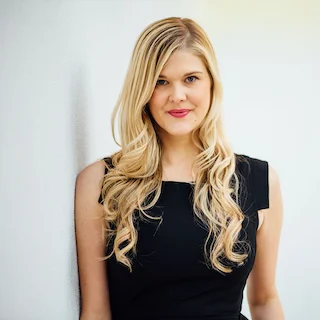
Featured guest
Dr. Natalie Crawford
OB-GYN and Reproductive Endocrinologist
Dr. Natalie Crawford is board certified in both Obstetrics and Gynecology and Reproductive Endocrinology and Infertility and is Director of Patient Experience and Education and co-founder of Fora Fertility, a boutique fertility practice in Austin, Texas. She is also a Clinical Assistant Professor of Women’s Health at the University of Texas Dell Medical School and Director of Women’s Health and Fertility at the Institute of Plant Based Medicine. Dr. Crawford completed her undergraduate education at Auburn University obtaining a degree in Nutrition Science, Medical School at University of Texas Medical Branch, Residency in Obstetrics and Gynecology at University of Texas Southwestern, and her Fellowship in Reproductive Endocrinology and Infertility at the University of North Carolina while concurrently obtaining a Master of Science in Clinical Research. She is passionate about educating and empowering women and promotes preventive care, plant based medicine, and fertility awareness through her multiple social media platforms. Dr. Crawford was named “Best Fertility Specialist in Austin” by the 2019 Austin Birth awards, and was the recipient of the Hope Award for Social Influence by Resolve: The National Infertility Association. She was named one of Austin’s top 40 under 40 in 2020 for her work empowering women. She is married to Austin native Jason Crawford, and they have 2 young children.