
The short answer
Start by investing in a few key people rather than collecting acquaintances, and treat the lonely feeling as a signal to reach out now. Look for reciprocity, reliability, and two-way trust, and let vulnerability build through small disclosures over time. You don't need one best friend; different people can meet different needs. If no mom group fits, start your own. Taking the first step is okay, and others will appreciate it.
Listen to Episode 65 · with Dr. Miriam Kirmayer
We enter into motherhood with the promise of a village of support, and when we get here it can feel surprisingly lonely. The isolation felt in motherhood is a topic that has come up a lot in sessions with my clients and with the pandemic forcing even more isolation, a season of life that could already be lonely to navigate has become even tougher for some of us. So, I asked Dr. Kirmayer here to help us navigate maintaining friendships and how to form new ones.
Dr. Kirmayer is one of the few people who have done a lot of research into adult friendships. There is a widespread assumption that adults have friendship figured out and that adult friendship should be easy. But through years of research and practice, Dr. Kirmayer found friendships are just as hard for adults to handle as they are for children. However, everyone seems to understand that childhood friendships are important, and there is an emphasis from society put on childhood friendships and support to help us navigate those relationships.
For adults, social connection is just as important as when we were younger, but we can get that from sources other than friends. But there is a benefit to having friendships. “As we get older in our adult years friendships become the largest indicator of our health and wellbeing,” Miriam said.
Let’s dive into the complexities of adult friendship.
Things to Look for in a Friend
“Different people can fulfill different friendship needs,” Dr. Kirmayer said. “Each friendship is going to be a bit unique.”
Different people can fulfill different friendship needs.
But reciprocity has to be there—both people have to be committed to seeing the friendship through. The importance of reliability, following through with what you say you’ll do, and showing up when our friends hope and maybe even expect us to. There also needs to be two-way trust and vulnerability. That’s not to say you have to bare your soul the first time you meet someone. Little tidbits of vulnerability dropped over time are how we develop trust. But to be more than acquaintances, a willingness to share our inside thoughts and hear our friend’s has to be there, and we have to be able to trust that this is a judgment-free space to do so.
The Role of Vulnerability in Friendships
Vulnerability doesn’t feel great in the moment, but it’s necessary on both sides to have a healthy friendship. We’re not going to be comfortable or confident with being vulnerable when it happens, but as we do it more often it may become less uncomfortable, or it may still be uncomfortable but we may appreciate the benefits of feeling heard and connected. And vulnerability doesn’t have to be all or nothing, in fact, you shouldn’t tell all initially. Everyone feels more comfortable and connected when small disclosures happen over time and we’re invited to do it again.
But it does feel like it affects the relationship, because it’s a big part of my life I can’t talk about.
Dr. Kirmayer said, “It’s okay for us to have our people we turn to when we want to celebrate a work win or parenting win.” Not everyone is the person to share your good news with. Some people are better at bringing frozen casseroles when something bad has happened. We don’t have to have one best friend, and sometimes getting caught up in that title can actually push us further away from how supported we feel.
We don’t have to have one best friend.
This idea of the BFF or one person we go to for everyone has become cliché, because it’s in so many movies and TV shows. Good storytelling requires a need to condense. The person on your favorite sit-com likely has one best friend because the writer can’t develop two more characters and additional relationships in less than thirty minutes. We can’t be everything for everyone either, and we shouldn’t expect our friends to.
“Having real expectations of our friends and what they’re good at is important,” Dr. Kirmayer stated.
Friendships Change During Motherhood
We can maintain friendships we had before motherhood, but they look different. “Many friendships do persist and thrive where one friend is a parent and the other is not,” Dr. Kirmayer told us. “Talking about the changes that are happening is the key to continuing those friendships.” She explained when we don’t talk about the changes people may feel rejected or that the friendship is no longer important to us.
Transparency keeps friends from personalizing things and being offended by allowing them to understand the ebbs and flows of seasons in our life. Change doesn’t have to be negative. It can be positive. She went on to say, “Change is unfamiliar and we don’t often like it, but it can also be exciting and meaningful and an opportunity to learn more about myself and how I cope with change, an opportunity to assess this friendship and the health of the friendship.”
It’s also important to remember our individual mood, state of mind, and depression can affect the lens we view people through too especially when we’re dealing with things like postpartum depression or anxiety. And challenges in our friendships and relationships impact our mental health, but if we’re struggling with mental health issues or stress that can affect our friendships and how our expectations of our friendships. It’s okay to need more from a friend for a period of time, but we have to communicate with them. Our friends aren’t mind readers. They can’t support us if they don’t know what we need.
And sometimes friendships may need to end. This doesn’t mean we no longer love or care about the person, but we have outgrown each other. We need to allow ourselves to grieve but also look for the positives. This change was necessary, because that relationship no longer fit in our life or no longer served us. But no longer investing time and energy in that relationship allows for opportunities to form new relationships.
Making True Mom Friends
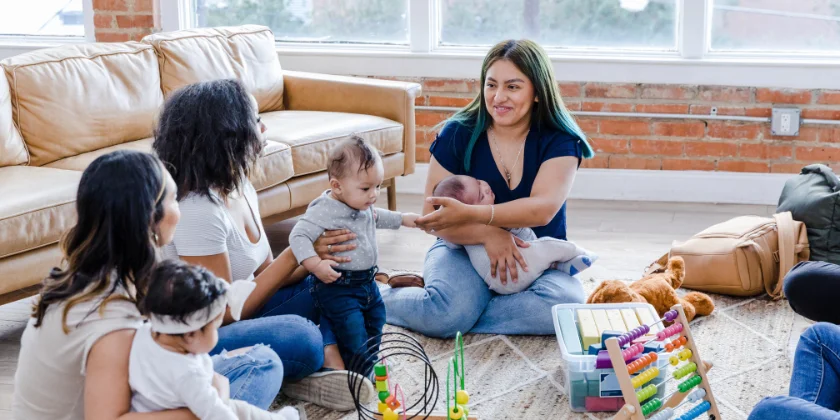
There is an idea that it’s easier for adults with kids to form new friendships, because you have these friendships by proxy. You can use your kid as the entryway by asking another parent to meet at a playground or take a walk. And that can be a good way to initially meet people. But Dr. Kirmayer said, “A true friendship exists independent of someone else’s relationship.” It can’t just be the convenience of kid’s being in the same class or our children’s milestones and whatever stage they’re in. She explained, “For true mom friendships to exist, we need to be showing up in those relationships.”
Comparisons in Friendships
Comparisons can make its way into our friendships, but the way it usually impacts us is internally—how we think about ourselves and our worth. It’s important to treat ourselves with compassion. How can we speak to ourselves like we would speak to a good friend? You probably wouldn’t criticize a good friend for not having the same strengths as someone else, so why do it to yourself? “But it’s also important to pay attention to the assumptions we’re making,” Mirriam said.
She went to visit her very domestic friend for a playdate. Her friend sent MIrriam’s son home with a bag of freshly baked treats. Mirriam left feeling guilty and like she didn’t measure up, because she should have done something like her super thoughtful friend. But then she realized maybe she showed up in other ways.
Social media pressures us to present ourselves as the “parent who has their shit together.”
Social media pressures us to present ourselves as the “parent who has their shit together.” This can spur comparisons and helps no one. We’re not helping other parents who look at this and think, “What am I doing wrong?” And we’re robbing ourselves of the chance to be authentic and vulnerable. This can be a way to cover up some of our vulnerabilities by focusing only on what’s working, so we don’t have to worry about the parenting practices we’re questioning or concerned about.
And sometimes we feel a need to talk ourselves up and put the best version of ourselves out there, because we want people to like us and accept us. “Unfortunately, it doesn’t always work like that. Vulnerability can be incredibly disarming,” Dr. Kirmayer said.
And we don’t always know what other people are struggling with. Sometimes a little bit of information can be dangerous. We’re judging ourselves against an incomplete standard because we don’t have all the information.
Coping With Loneliness
“Motherhood is lonely,” Dr. Kirmayer said. “It’s lonely to be up at night when everything is dark.” But the flip side of that is we feel lonely while we’re up in the middle of the night lots of other people are going through the same thing. This is where the friendships by proxy can help. There is something about having friends with similar age kids who are experiencing the same things.
But when we’re lonely, our instinct is often to collect friends, because if we have more people in our circle we’ll be less lonely. But having a few deep connections can be better than having an accumulation of acquaintances.
When we feel lonely, that’s a signal that we need to invest in connections right now.
Dr. Kirmayer advises us, “Invest in or seek out a few key people who allow you to feel seen and support you in being the kind of parent you want to be.” You probably won’t match up on everything but it can be helpful to have a friend who sees things through a similar lens or at least is very open to the way you see things, so you can feel seen and supported. “Hunger is a signal we need to eat. When we feel lonely, that’s a signal that we need to invest in connections right now,” Dr. Kirmayer said. So, it’s okay to take the initiative. If there isn’t a mommy group that meets your needs, start your own. People will appreciate taking the first step.
You’re doing great, mamas! Keep showing up.
And here’s more help for dealing with the loneliness and isolation in motherhood if you need it.
Work with a Momwell therapist who specializes in maternal mental health.
In summary
- In adulthood, friendships become one of the largest indicators of your health and wellbeing, so they are worth real investment even when they feel hard.
- Healthy friendships rest on reciprocity, reliability, and two-way trust, with vulnerability built through small disclosures shared over time rather than baring your soul at once.
- You don't need one best friend; different people can fulfill different needs, and clinging to a single "BFF" can actually leave you feeling less supported.
- Friendships shift during motherhood, and talking openly about those changes keeps friends from personalizing the ebbs and flows, while some friendships may end and deserve grieving.
- Loneliness is a signal to invest in connection now, so seek out a few people who help you feel seen and supported, and take the initiative if no existing group fits.
Common questions
What should you look for in a mom friend?
Look for reciprocity, where both people are committed to the friendship, along with reliability and following through on what you say. There also needs to be two-way trust and vulnerability, built through small disclosures over time in a judgment-free space. Remember that different people can fulfill different needs, so you don't need one person to be everything.
How do friendships change after becoming a mother?
Friendships can persist and thrive even when one friend is a parent and the other is not, but they tend to look different. Talking openly about the changes is key, since unspoken shifts can leave friends feeling rejected. Your own mood and experiences like postpartum depression or anxiety can also color how you see these relationships.
Can therapy or support help with loneliness in motherhood?
Motherhood can be genuinely lonely, and that loneliness is a signal that you need to invest in connection right now. Dr. Kirmayer suggests seeking out a few key people who help you feel seen and support the kind of parent you want to be. Working with support for moms can also help you make sense of how your state of mind shapes your relationships and expectations. Learn more about loneliness in motherhood →

Written by
Erica Djossa
Registered Psychotherapist · CEO & Founder of Momwell
Erica Djossa is the CEO and founder of Momwell and a registered psychotherapist specializing in maternal mental health with over a decade of experience. A mother of three boys, she founded Momwell to set a standard of care for providers and ensure mom-centred, specialized mental health support at every stage of motherhood. She is a regular media contributor, featured in Time, USA Today, the Toronto Star, Cityline, and more.

Featured guest
Dr. Miriam Kirmayer
Clinical Psychologist
Dr. Miriam Kirmayer is a clinical psychologist and leading friendship expert who has studied the science of friendship and social connection for over a decade. Her work focuses on helping others navigate life transitions, cultivate resilience and self-compassion, and build stronger relationships with the people who matter most. Dr. Kirmayer’s words and advice have been featured in The Atlantic, CNN, Forbes, The New York Times, TIME, Vogue, Psychology Today, Women’s Health, The TODAY Show and NPR. Dr. Kirmayer lives in Montreal with her husband and their sweet, curious, and spirited son, Liam. She is currently writing her first non-fiction book on adult friendships.